

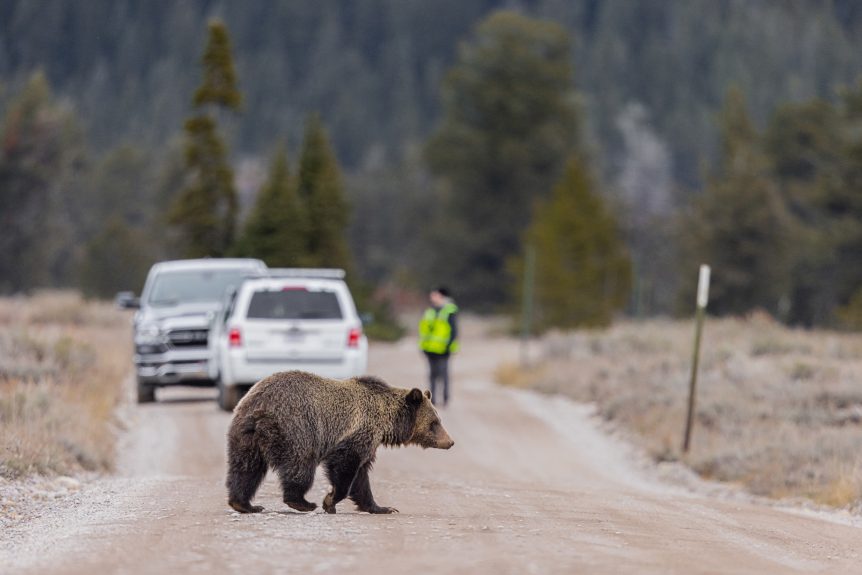
There’s something truly special about waking up on the banks of the North Fork of the Shoshone River, stepping outside your RV or cabin, and breathing in the crisp Wyoming morning air. You’re just 32 miles from the East Gate of Yellowstone National Park — one of the most wild and breathtaking places on earth. The bison are roaming, the geysers are steaming, and the trails are calling your name.
But before you lace up your boots and head out the door, there’s something every visitor to this region needs to understand: you are in bear country and bear safety is an important topic to study and discuss with everyone you are traveling with. Both grizzly bears and black bears call this landscape home, and knowing how to share the wilderness with them safely is one of the most important things you can do before your trip begins.
The good news? Bear encounters are rare, and with the right knowledge and preparation, your Yellowstone adventure can be both thrilling and safe. Here’s everything you need to know.
Know Your Bears — Grizzly vs. Black Bear
The Yellowstone region is home to both grizzly bears and American black bears, and knowing the difference between the two matters when it comes to how you respond in an encounter.
Grizzly bears are larger and more heavily built, typically with a distinctive shoulder hump, a dished facial profile, and shorter, rounded ears. Their coloring ranges from blond to dark brown. Grizzlies are more commonly found in open meadows and alpine terrain and are known to be more aggressive when surprised or when protecting cubs or food.
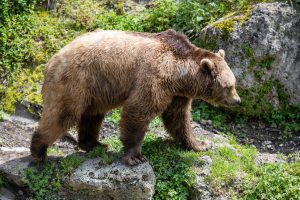
A majestic brown Grizzly bear walking along the rocks on a sunny day in summer
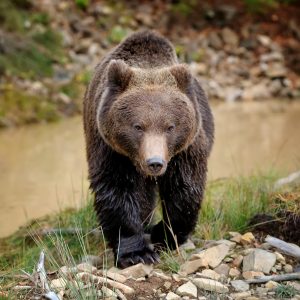
Notice the hump on its shoulders, this is one of the most noticeable features of a grizzly.
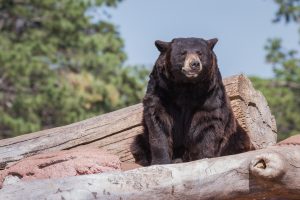
Black bears are generally smaller and more slender, with a straight facial profile, taller ears, and no shoulder hump. Despite their name, they can range in color from black to cinnamon to blond. Black bears are more commonly found in forested areas and tend to be more timid, though they should never be underestimated.
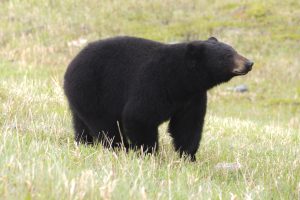
Notice with the black bear there is no shoulder hump.
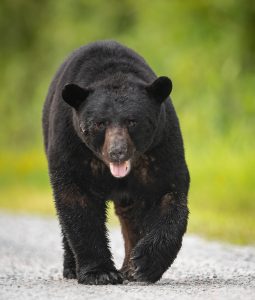
If you compare this photo to the photo above of a grizzly you will notice the difference in the ears.
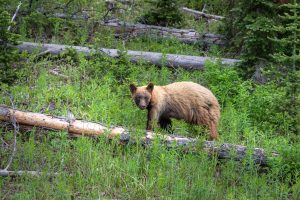
Despite the lighter coloring this is a black bear.
Both species are powerful, fast, and unpredictable. Treat every bear sighting with respect and caution regardless of species.
Bear Spray — Your Most Important Piece of Gear

Person hiking with bear spray readily available in hand.
Before we talk about hitting the trails, let’s talk about the single most important piece of safety equipment you should have in bear country: bear spray.
Studies have consistently shown that bear spray is more effective at deterring bear attacks than firearms. It is not insect repellent — it should never be applied to your body or gear. Bear spray is a pressurized canister of capsaicin-based deterrent designed to be deployed in the path of a charging bear.
When purchasing bear spray, look for an EPA-registered product with a minimum of 7.9 oz and a minimum 1% capsaicin concentration. Carry it in a holster on your hip where it is immediately accessible, not buried in your pack. Every adult in your group should have their own canister and know how to use it before setting foot on the trail.
Bear spray is available for purchase in Cody, Wyoming at several sporting goods and outdoor retailers before you head up the North Fork toward Yellowstone. Do not wait until you are on the trail to think about this.
Bear Safety on the Trail
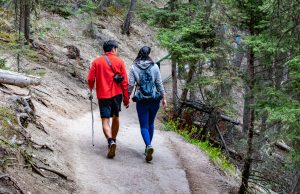
Couple Hiking
Yellowstone’s trails are some of the most spectacular in the world — and some of the most active in terms of wildlife. Follow these guidelines every time you head out:
Make noise. Bears don’t want to encounter you any more than you want to encounter them. Talk loudly, clap your hands, or use a bear bell on the trail, especially when moving through dense brush, near streams, or in areas with limited visibility.
Travel in groups. Groups of three or more people are significantly less likely to have a negative bear encounter. There is real safety in numbers in bear country.
Keep bear spray accessible. Every adult on the trail should have bear spray on their hip — not in their pack. In a sudden encounter, you may have only seconds to react. Practice removing the safety clip and deploying your canister before you need to use it for real.
Hiking with kids — formation matters. If you are hiking with children, how you structure your group on the trail could make all the difference. Place your kids between the adults in your group, with one adult carrying bear spray at the front of the line and another adult carrying bear spray at the back. This ensures that no matter which direction a bear approaches from, a prepared adult is the first line of defense — not a child.
Stay alert. Put the phone away and pay attention to your surroundings. Look for fresh bear signs like tracks, scat, digging, or overturned rocks and logs.
Never approach a bear. If you spot a bear in the distance, observe it from afar and give it plenty of space. In Yellowstone National Park, regulations require you to stay at least 100 yards away from bears at all times.
Keep dogs leashed. A dog that runs toward a bear can agitate it and lead it back directly to you. Keep in mind that dogs are not allowed on any trail inside of Yellowstone National Park. Learn more about pets in Yellowstone.
What to Do in a Bear Encounter
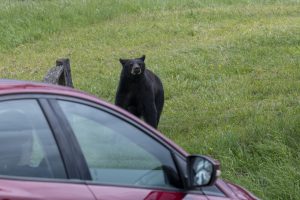
Black Bear approaching vehicle
Despite your best precautions, encounters can happen. Knowing how to respond could save your life.
Stay calm. Do not run. Running triggers a predatory chase response in bears, and a bear can reach speeds of 35 miles per hour — you will not outrun it.
Identify yourself. Speak in calm, low tones so the bear can identify you as a human and not a threat. Wave your arms slowly so the bear can see what you are.
Give the bear space. If the bear is not approaching, slowly back away while facing it. Do not turn your back on the bear.
Deploy bear spray if the bear charges. Wait until the bear is within 30-60 feet before deploying, then spray in a cloud between you and the bear. Aim slightly downward so the spray creates a barrier.
Make sure you report the bear encounter to the appropriate personnel.
For more detailed guidance on how to react in an encounter, the Wyoming Game & Fish Department’s Bear Wise Wyoming program is an outstanding resource.
Bear Safety at Camp
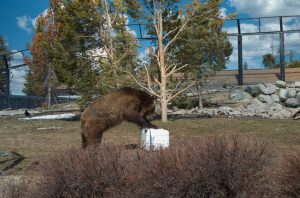
Bears are notorious for getting into anything that smells good.
Your campsite is just as important as the trail when it comes to bear safety. Bears have an extraordinary sense of smell and will investigate any food-related odors in their territory. A careless camp is an invitation for trouble.
Store food properly. All food, coolers, cooking equipment, and anything with a scent should be stored in a bear-resistant container or locked inside your vehicle when not in use. Never leave food unattended outside.
Keep a clean camp. Clean up cooking areas immediately after meals. Do not leave dirty dishes, grease, or food scraps sitting out. Dispose of grease by pouring it into a sealed container and packing it out — never dump it on the ground.
Secure your garbage. Garbage should be stored where bears can neither smell nor access it, in a bear-resistant container or inside a locked vehicle or building. Haul garbage to an approved disposal site as often as possible to prevent odor buildup. According to the Wyoming Game & Fish Department, outside garbage cans should be used for non-food items only.
Pet food and birdfeeders. If you have pets with you, feed them inside or supervise feeding closely and remove any leftover food immediately. Bird feeders are best to not be used at all.
Keep pets secured. Dogs and other pets should be kept inside at night. Their food — and their presence — can attract bears to your campsite.
For a comprehensive guide to living and camping in bear country, we highly recommend visiting the Wyoming Game & Fish Department’s official resource page: Living in Bear Country — Bear Wise Wyoming.
Respecting Wildlife Means Protecting Wildlife
One of the most important things to understand about bear safety is that your behavior directly impacts the bears’ survival. A bear that associates people or campsites with food rewards quickly becomes a problem bear, and problem bears are often euthanized.
If a bear gets into your food, garbage, or campsite, remove the attractant immediately and notify the Wyoming Game & Fish Department. Do not assume the bear will move on without intervention. Reporting the incident helps wildlife managers track bear activity and protect both people and animals.
Observe bears from a distance. Never feed them, intentionally or accidentally. Keep your camp clean. These simple actions go a long way toward ensuring that the bears of the Yellowstone region remain wild, healthy, and a source of wonder for generations of visitors to come.
Come Experience Bear Country from the Comfort of Old Faithful RV Park
Knowing the rules of the wilderness makes the adventure so much richer. When you understand bear country, you move through it with confidence, awareness, and a deep appreciation for the wildlife that shares this incredible landscape with us.
At Old Faithful RV Park, we’re proud to be situated right in the heart of it all — on the scenic banks of the North Fork of the Shoshone River in Cody, Wyoming, just 32 miles from the East Gate of Yellowstone National Park. Whether you’re staying in one of our full-hookup RV sites or settling into one of our cozy rustic cabins, you’ll have the perfect home base for exploring one of the greatest wild places on earth.
Opening May 8, 2026 for the 2026 season — under new management and better than ever.
Rest. Explore. Repeat.