
Yellowstone wildlife safety is something every visitor should think about before their trip, not just hikers heading deep into the backcountry. Seeing wildlife up close is one of the best parts of a Yellowstone trip, bison grazing in open meadows, elk bugling at dusk, maybe even a wolf or a grizzly bear if you are lucky and patient. It is one of the few places left in the country where animals like this still roam free and wild.
But wild means wild. Every year people get hurt because they got too close, moved too fast, or assumed an animal that looked calm would stay that way. This guide covers everything you need to know about Yellowstone wildlife safety before your trip, written plainly so you can keep it in mind without overthinking it.
Yellowstone Wildlife Distance Rules You Need to Know
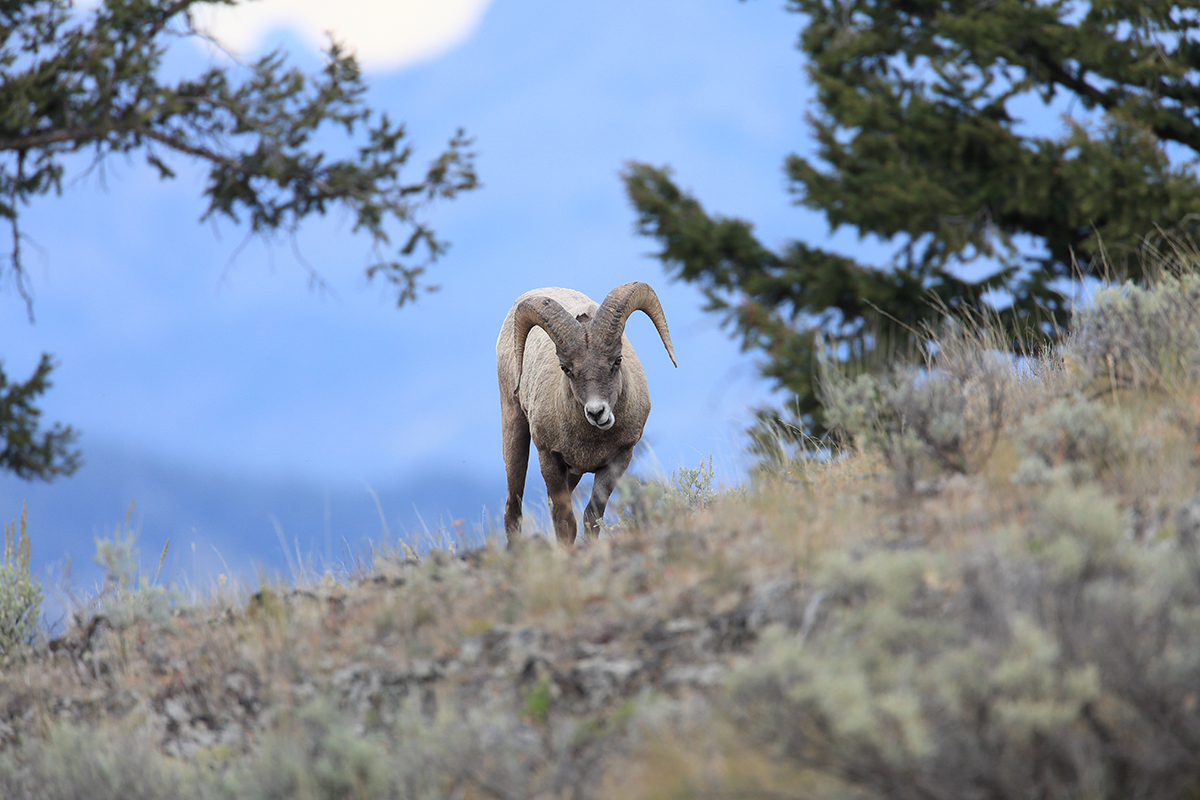
A bighorn ram pauses on a hillside, one of the many species that calls for the same respectful distance as bison and elk.
This is the single most important part of Yellowstone wildlife safety. Yellowstone requires visitors to stay at least 100 yards from bears, wolves, and cougars, and at least 25 yards from all other wildlife, including bison and elk. That is the law, not a suggestion.
For reference, 25 yards is about the length of two and a half school buses. 100 yards is roughly the length of a football field. If you are ever unsure whether you are close enough to break the rule, you are probably too close.
These Yellowstone wildlife distance rules exist for good reason. Bison look slow but can run up to 35 miles an hour and weigh close to a ton. Elk can be aggressive, especially during the rut in fall or when calves are nearby. Bears and wolves need even more space simply because the consequences of a bad encounter are far more serious.
Yellowstone Bison Safety: Bigger and Faster Than They Look
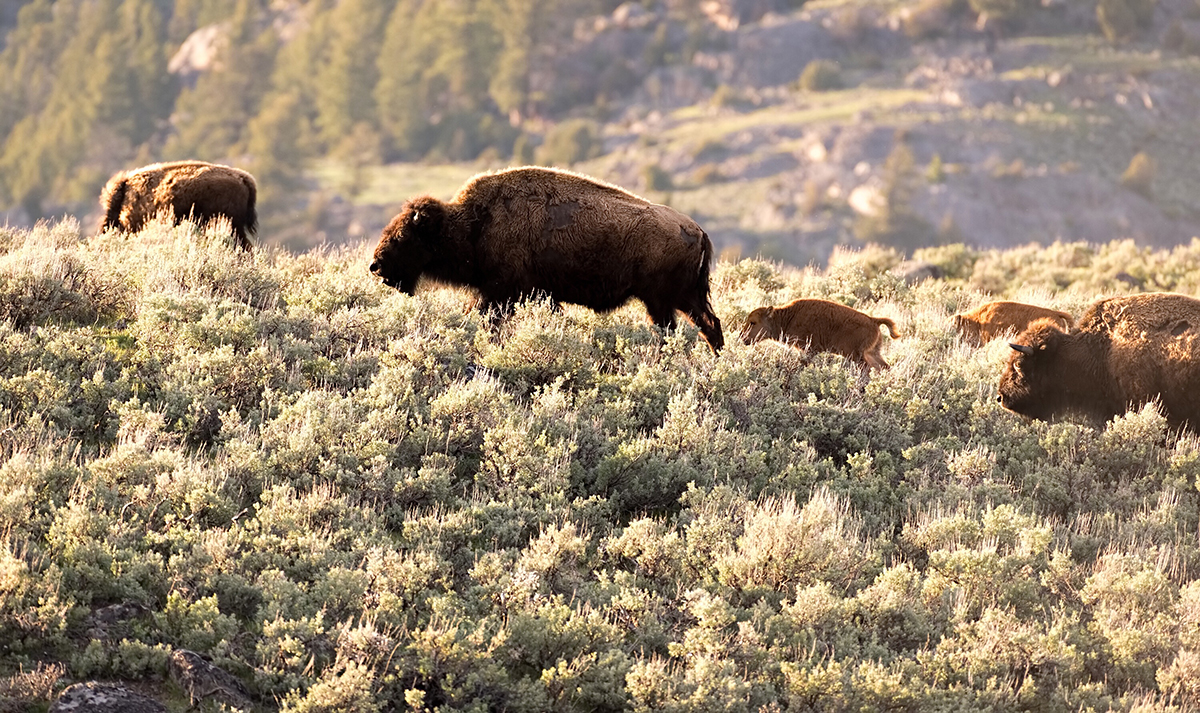
A bison herd with a young calf moves through open sagebrush, exactly the kind of group visitors should give plenty of space, especially with young nearby.
Bison are the animal most visitors get too close to, often without realizing it. They graze near roads, wander through parking lots, and sometimes block traffic entirely as they cross. It is easy to forget how dangerous they can be because they often seem calm.
Good Yellowstone bison safety starts with watching for warning signs. If a bison lifts its tail, paws at the ground, or swings its head toward you, it is telling you to back off. Never approach a bison for a photo, and never try to walk between bison and where you parked. If one is blocking the road, the only thing to do is wait. They will move when they are ready.
Bear Safety Yellowstone: Carry Spray and Make Noise
All of Yellowstone is bear country, from the busiest boardwalks near Old Faithful to the quietest backcountry trail. Both grizzly bears and black bears live in the park, and while attacks are rare, they do happen.
In May 2026 two hikers were injured near the Mystic Falls Trail close to Old Faithful after an encounter with a bear, the first bear related injury of the season. Park officials responded by closing a section of trails in the area and reminding visitors to stay bear aware. It is a good reminder that good bear safety in Yellowstone matters even near popular, heavily visited parts of the park, not just deep in the backcountry.
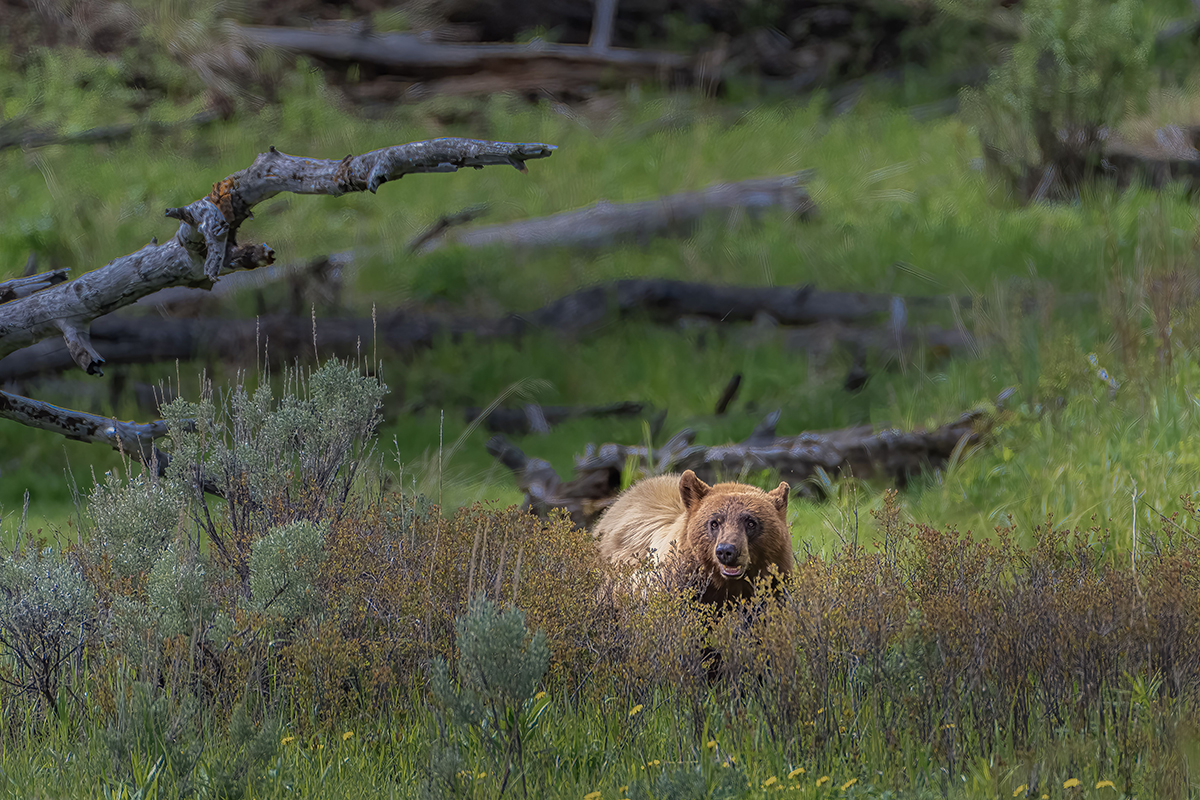
A cinnamon phase black bear watches from the brush, a reminder that all of Yellowstone is bear country, even areas that look quiet.
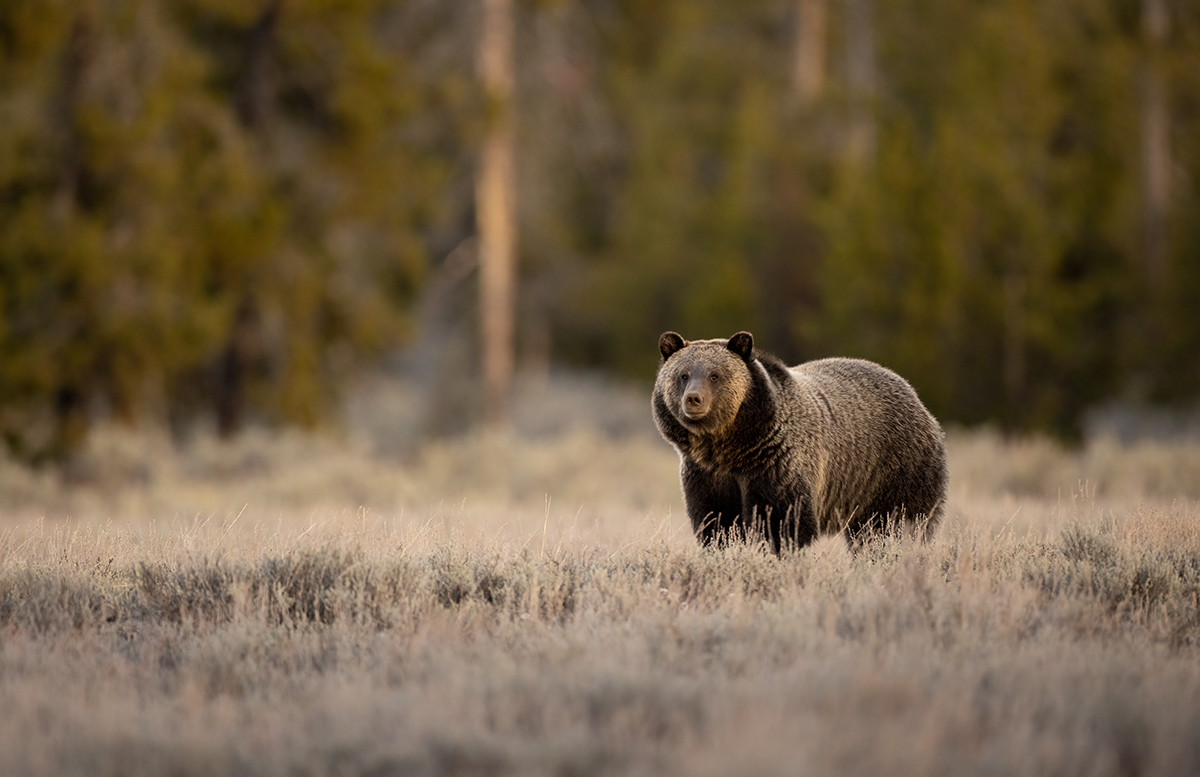
A grizzly bear pauses in an open field, a powerful reminder of why the 100 yard distance rule and bear spray matter so much in this part of the country.
Here is what actually helps:
Carry bear spray Yellowstone rangers and biologists recommend, and know how to use it. It is not required by law, but it is strongly recommended and proven to be highly effective at stopping an aggressive bear. You can buy or rent it near the park entrances or in nearby towns.
Hike in groups of three or more when possible. Larger groups are louder, more visible, and far less likely to surprise a bear.
Make noise on the trail. Talk, clap, or call out periodically, especially in thick brush or areas with limited visibility. Bears generally want to avoid people, and noise gives them time to move away before you are close.
Know what to do if you see one. If a bear is far off and unaware of you, go around it and keep an eye on it as you go. If it is closer and aware of you, speak calmly and back away slowly. Never run, since that can trigger a chase response. If a bear charges, bear spray should be used when it is roughly 25 to 40 feet away, aimed slightly downward to create a cloud it has to run through.
Read our complete Bear Safety in Yellowstone Country guide for more detail before your trip.
Wolves and Other Wildlife
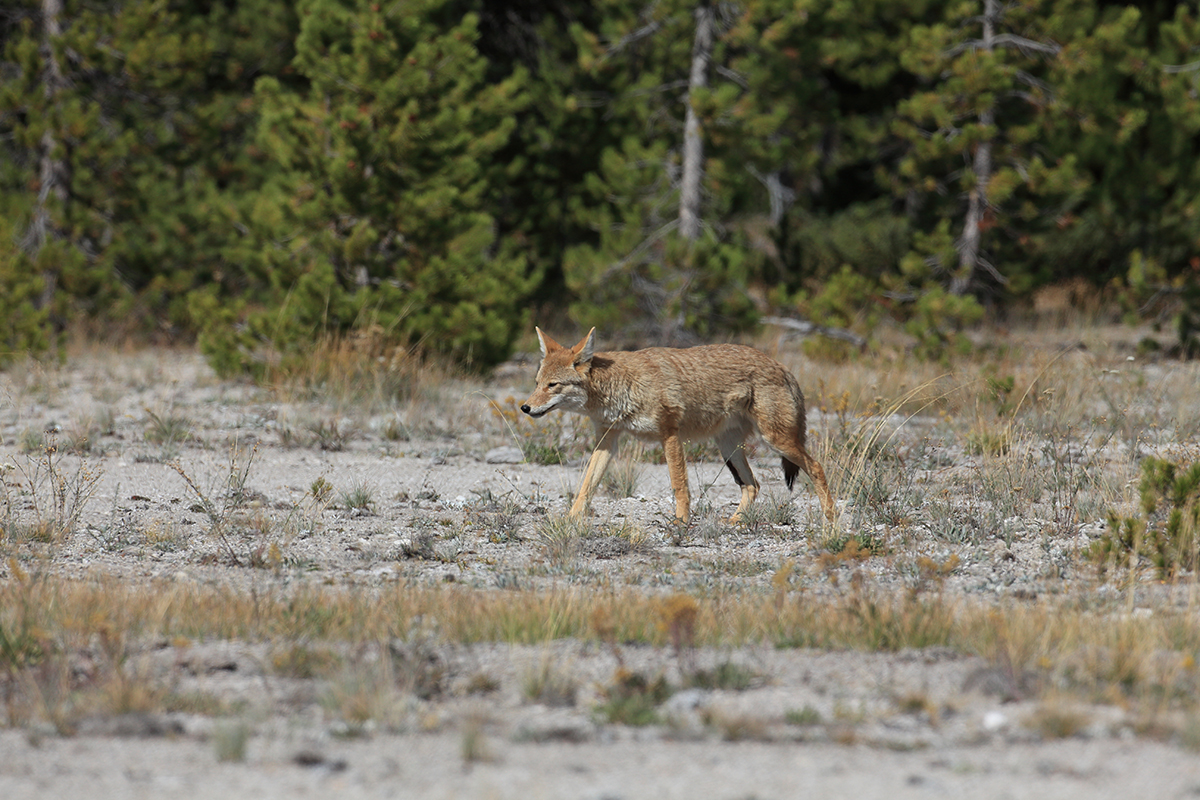
A coyote moves through open ground near the trees, one of the smaller predators visitors may spot throughout the park.
Wolves require the same 100 yard distance as bears. They are most often seen in places like Lamar Valley and Hayden Valley, usually at a distance, which is exactly how it should stay. If you want a closer look, use binoculars or a spotting scope rather than walking closer.
Smaller animals deserve caution too. Foxes, skunks, raccoons, and bats can carry rabies. Most avoid people entirely, but if one seems unusually tame, aggressive, or disoriented, keep your distance and report it to a ranger. Never feed or try to handle any wild animal, no matter how harmless it looks.
Why Feeding Wildlife Is Never a Good Idea
It can be tempting to toss a snack to a curious chipmunk or squirrel, but feeding any animal in Yellowstone causes real harm. Animals that get used to human food often become more aggressive around people, and that usually ends badly for the animal. The phrase rangers use is simple and true, a fed bear is a dead bear. The same logic applies to every other species in the park.
Driving Safely Around Wildlife
Wildlife jams are a normal part of visiting Yellowstone, especially in summer. If you come across one, the safest thing to do is stay in your vehicle, be patient, and wait for animals to clear the road on their own.
If you want to pull over to watch or take a photo, use a designated pullout and park with all four tires fully off the road. Never stop in the middle of the road, even briefly, since it puts you and other drivers at risk.
Where to Practice Yellowstone Wildlife Safety While Watching Animals
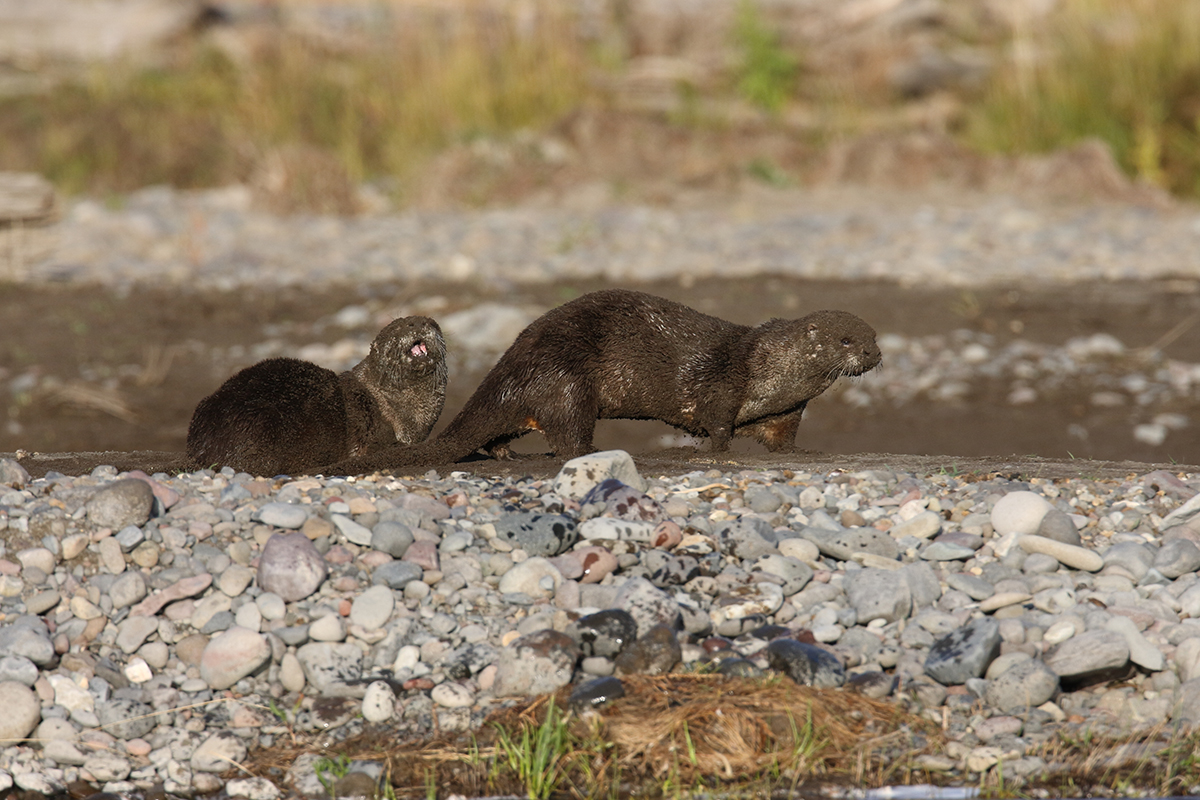
A pair of river otters explore a rocky riverbank, a fun and less commonly seen sighting for visitors who take the time to scan the water’s edge.
Some of the best wildlife watching in Yellowstone happens from designated pullouts and boardwalks, especially around Lamar Valley and Hayden Valley. These spots are designed to give you a great view while keeping a safe distance built in. Rangers are often present in these areas too, so follow any instructions they give without hesitation.
For guests staying at Old Faithful RV Park near the East Gate, Hayden Valley is an easy morning drive and one of the most reliable spots in the park for spotting bison, elk, and occasionally wolves or bears from a safe distance.
A Few More Things Worth Knowing
Store food properly. Bears can be drawn into campsites by food smells. Keep food in your vehicle or a bear proof container, especially overnight.
Avoid hiking at dusk or dawn alone in bear country. This is when bears are most active. If you do hike during these hours, stick with a group.
Respect trail and area closures. If an area is closed for bear activity, it is closed for a real reason, not as a formality.
Talk to a ranger before you head out. They know the most current conditions and can tell you about any recent sightings or closures in the area you plan to visit.
Your Basecamp for a Safe Yellowstone Trip
Old Faithful RV Park sits just 32 miles from the East Gate of Yellowstone National Park along the Buffalo Bill Scenic Byway. It is a great home base for exploring the park’s wildlife rich areas like Hayden Valley while still having a comfortable, quiet place to come back to each evening.
Before you head into the park, check out our Bear Safety in Yellowstone Country guide and our Yellowstone Wildlife Watching Guide for more on where and when to see the most wildlife safely.
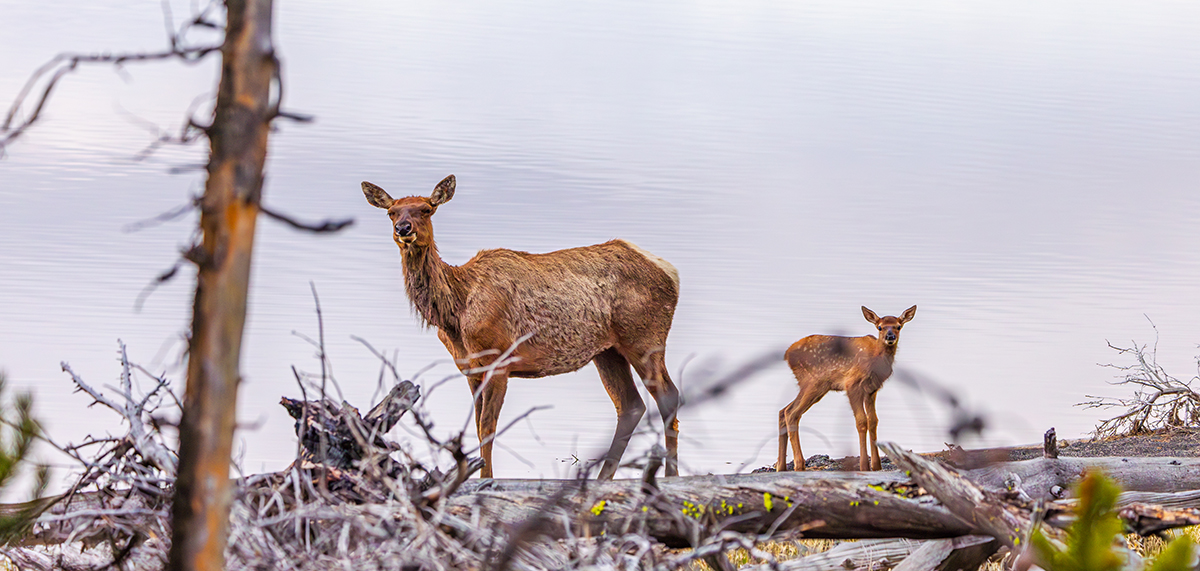
An elk cow keeps a close watch near her calf, a clear reminder why extra distance is wise around any animal with young nearby.
Frequently Asked Questions About Yellowstone Wildlife Safety
How far away do I need to stay from bison in Yellowstone?
At least 25 yards, which is the standard for Yellowstone bison safety. Bison can run up to 35 miles an hour and are responsible for more visitor injuries than any other animal in the park.
How far away do I need to stay from bears and wolves?
At least 100 yards. This is one of the most important Yellowstone wildlife distance rules and applies to all bears, wolves, and cougars throughout the park.
Is bear spray required in Yellowstone?
No, carrying bear spray Yellowstone wide is not legally required, but it is strongly recommended, especially for hiking or spending time outside of developed areas. It is proven to be highly effective at stopping aggressive bears.
What should I do if a bear approaches me?
Stay calm, speak in a steady voice, and back away slowly without running. If the bear continues to approach, use bear spray once it is within 25 to 40 feet. This is one of the most essential bear safety Yellowstone visitors should know before any hike.
What do I do if a bison is blocking the road?
Wait. Do not honk, do not try to drive around it, and do not get out of your vehicle. It will move on its own.
Where is the best place to safely watch wildlife in Yellowstone?
Designated pullouts and boardwalks near Lamar Valley and Hayden Valley offer some of the best and safest wildlife viewing in the park, and following good Yellowstone wildlife safety habits there will make your trip even better.