
There is a moment that happens to almost every first time visitor to Yellowstone National Park, usually somewhere between watching Old Faithful erupt for the first time and locking eyes with a wild bison from the car window, when the sheer reality of where you are hits you like a wave. This place is not like anywhere else on earth. It never has been. And no amount of photographs or travel blogs fully prepares you for it.
If you are first time visiting Yellowstone this summer, you are in for one of the great American adventures. But Yellowstone is also enormous, complex, and demanding of respect and preparation. First timers who arrive without a solid plan often find themselves overwhelmed, stuck in traffic, or spending their best hours of the day in a parking lot rather than in the park.
This complete guide covers everything you need to know before your first visit: what to expect, how to plan your trip, which entrance to use, the non-negotiable safety rules, the must-see attractions, the best easy hikes for beginners, how to structure your days, and why Old Faithful RV Park in Cody, Wyoming is the perfect first timer basecamp just 32 miles from the East Gate.
Let us get you ready for the trip of a lifetime.
First Time Visiting Yellowstone: Know What You Are Getting Into
Before anything else, every first time visitor needs to understand one fundamental truth about Yellowstone: this park is enormous and it will humble you.
Yellowstone is the world’s first national park with over 2.2 million acres to explore. To put that in perspective, Yellowstone is larger than the states of Rhode Island and Delaware combined. Yellowstone is huge and many first-time visitors underestimate both its size and the time it takes to get from one place to another.
The park’s main road system forms a figure-8 loop connecting all the major attractions. Driving the full Grand Loop Road without stopping takes approximately three to four hours under ideal conditions. With wildlife jams, stops at attractions, and parking lot searches factored in, a single day of exploring can cover far less ground than most first timers expect.
Here are the essential facts every first time visiting Yellowstone visitor needs to internalize before arriving:
Elevation: The park sits at elevations between 6,000 and 11,000 feet above sea level. Altitude affects many visitors, particularly those arriving from lower elevations. Stay hydrated, take it easy on your first day, and be aware that physical exertion at altitude is significantly more demanding than at sea level.
Weather: Unpredictability characterizes Yellowstone’s weather. Expect big temperature swings, rain, or snow during every month of the year. No matter when you visit bring a warm jacket, rain gear, and lots of layers. This is not an exaggeration, it has snowed in Yellowstone in July. Pack for everything.
Cell Service: No cell service outside of main park areas means you should download offline maps before you go and pick up a physical map at any entrance station or visitor center. The Yellowstone NPS app offers offline functionality and is essential for first time visitors.
No Shuttle System: There is no shuttle system like in some other parks. You will need a vehicle for the duration of your visit. Plan your routes carefully each morning to minimize backtracking and maximize time at the attractions that matter most to you.
Entrance Fees: It costs $35 per vehicle to enter the park and this is good for seven days. If you have plans to visit Grand Teton, Yellowstone, and other national parks it is worth it to purchase the America the Beautiful Pass at $80, valid for one year.
Yellowstone Trip Planning: Choosing the Right Time to Visit
Yellowstone trip planning starts with one of the most important decisions you will make: when to go. Each season offers a dramatically different experience and the right time for your first visit depends on what you value most.
Spring: May and Early June Spring is one of the best-kept secrets in Yellowstone trip planning for first timers. Beat the crowds and elevated accommodation prices by coming just before or after the high season in May or October. Baby bison calves are wobbling alongside their mothers, grizzly bears that have emerged hungry are actively foraging after a long winter, wolf pups are emerging from their dens, and wildflowers are carpeting the meadows. The park feels alive in a way that is genuinely unique to spring. Old Faithful RV Park opens early May, perfectly timed for spring adventurers.
Summer: Late June Through August Summer is peak season for a reason. Most people plan a trip during the summer season from June to early September. This is when all of the roads, campgrounds, and trails are open. The trade-off is significant crowds and long wait times at popular attractions. July daily visitor counts routinely hit 30,000 and parking at major thermal areas fills completely by 9am. For first timers who visit in summer the key is starting every day before sunrise and having a solid plan.
Fall: September and October September is the best month for most visitors — elk rut in full display, grizzlies gorging on whitebark pine nuts before hibernation, and roughly 40% fewer visitors than July. The boardwalks clear out. The light gets golden earlier. For first timers who have flexibility in their schedule fall is genuinely the finest time to visit Yellowstone and delivers an experience that summer simply cannot match.
Yellowstone trip planning tip: Whatever season you choose, book your accommodation as early as possible. If you want to stay inside the park in summer you have to book your Yellowstone hotel up to a year in advance especially for the most popular lodges. Accommodation outside the park at places like Old Faithful RV Park offers more availability and significantly better value.
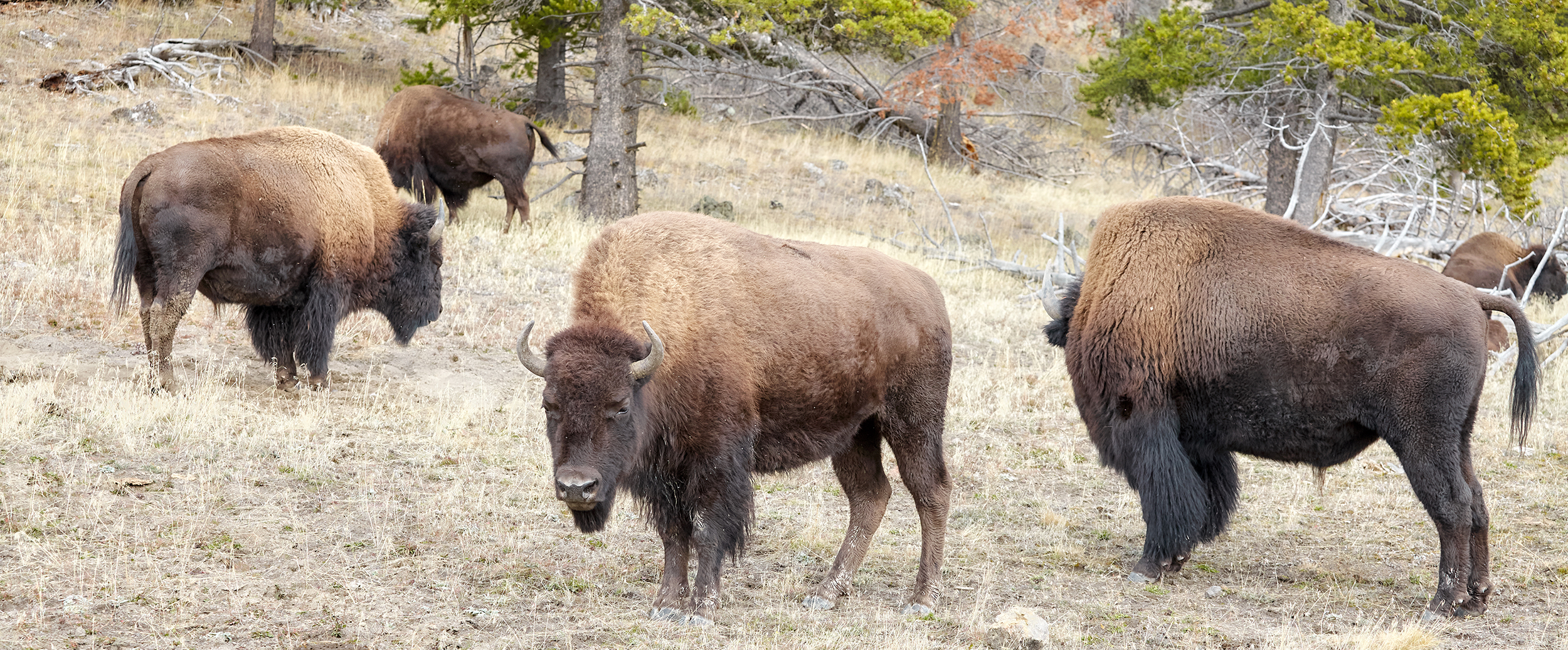
American bison in the Yellowstone park, USA.
Yellowstone Trip Planning: Choosing the Right Entrance and Basecamp Strategy
This is where Yellowstone trip planning gets really interesting, and where most first timers make their biggest mistake by defaulting to the West Entrance without considering their options.
Yellowstone has five entrances and where you stay and which gate you use shapes your entire experience. Here is honest advice for first timers on the two main approaches to Yellowstone trip planning.
The Multi-Basecamp Strategy: For Visitors Who Don’t Mind Moving Around
If you have five or more days and are comfortable moving your basecamp partway through your trip, splitting your stay across two or even three basecamps is genuinely the best way to experience all of Yellowstone’s major highlights without spending hours driving the full loop road every single day.
Here is a suggested multi-basecamp approach for a first timer:
Days 1-3: East Gate Basecamp, Old Faithful RV Park, Cody Wyoming
Start your Yellowstone adventure at Old Faithful RV Park, just 32 miles from the East Gate on the North Fork of the Shoshone River. From here you have direct access to Hayden Valley for world-class wildlife watching, the Grand Canyon of the Yellowstone, Yellowstone Lake, Sylvan Pass, and the spectacular Buffalo Bill Scenic Byway drive that begins the moment you leave camp. Evenings in Cody, Wyoming give you the Buffalo Bill Center of the West, the Cody Nite Rodeo, outstanding dining, and authentic Western culture.
Days 4-5: South Gate Basecamp, Jackson Hole / Grand Teton Area
Drive through the park from the East Gate to the South Gate via the Yellowstone Lake corridor — a spectacular journey in itself. Base yourself near Jackson, Wyoming for access to the South Entrance, West Thumb Geyser Basin, Grant Village, and the extraordinary Grand Teton National Park just to the south. Grand Teton is the dramatic mountain scenery while Yellowstone is the geothermal ecosystem and wildlife diversity. They complement each other completely and are worth doing together.
Days 6-7: West Gate Basecamp, West Yellowstone Area
Move your basecamp to West Yellowstone for your final days and tackle the iconic western attractions: Old Faithful and the Upper Geyser Basin, the Grand Prismatic Spring, the Norris Geyser Basin, and the Madison River wildlife watching corridor. Entering through the West Gate for just two or three days means you experience the crowds for a limited time rather than the full duration of your trip.
This multi-basecamp approach lets you experience every major section of Yellowstone from the most convenient possible position each day, minimizing driving time inside the park and maximizing time at the attractions themselves.
The Single Basecamp Strategy: Why the East Gate is the Smart Choice for First Timers
If moving your basecamp is not appealing, and for many families and first timers it absolutely is not, then choosing one great basecamp and day-tripping into different sections of the park each day is a perfectly excellent strategy. And for this approach the East Gate near Cody, Wyoming is the smartest single basecamp choice available.
Here is why:
The drive to the East Gate along the Buffalo Bill Scenic Byway is one of the most beautiful in America, and wildlife watching starts the moment you leave camp. The East Gate delivers direct access to Hayden Valley, Yellowstone Lake, and the Grand Canyon of the Yellowstone without fighting through the crowded western geyser basin traffic to reach them. And the East Gate Yellowstone crowds difference compared to the West Entrance is dramatic, especially on busy summer days and holiday weekends when West Entrance lines can mean 30 to 60 minutes of waiting before you even enter the park.
Read our complete Best Yellowstone Entrance Guide for the full side by side comparison of all five entrances.
What to Know Before Visiting Yellowstone: The Rules That Matter
Every first time visitor to Yellowstone needs to understand these non-negotiable rules before setting foot in the park. Knowing them is not just about following regulations, it is about keeping yourself safe and protecting the extraordinary ecosystem you came to experience.
Wildlife Safety Distances
Always maintain a minimum of 100 yards from bears, wolves, and cougars and 25 yards from all other animals including bison and elk. These are federal regulations and they exist because wildlife encounters at close range are genuinely dangerous. Every year visitors are injured by bison, bears, and elk, almost always because they got too close. The 25-yard distance for bison is roughly the length of two school buses. Make it a habit to count it out every time.
Bear Spray is Non-Negotiable
All of Yellowstone is bear country so be sure to carry bear spray. Every adult in your group must carry bear spray in an accessible hip holster every time you leave your vehicle. Purchase bear spray in Cody, Wyoming before heading up the North Fork of the Shoshone River toward the East Gate. Read our complete Bear Safety in Yellowstone Country guide before your trip — essential reading for every first time Yellowstone visitor.
Thermal Feature Safety
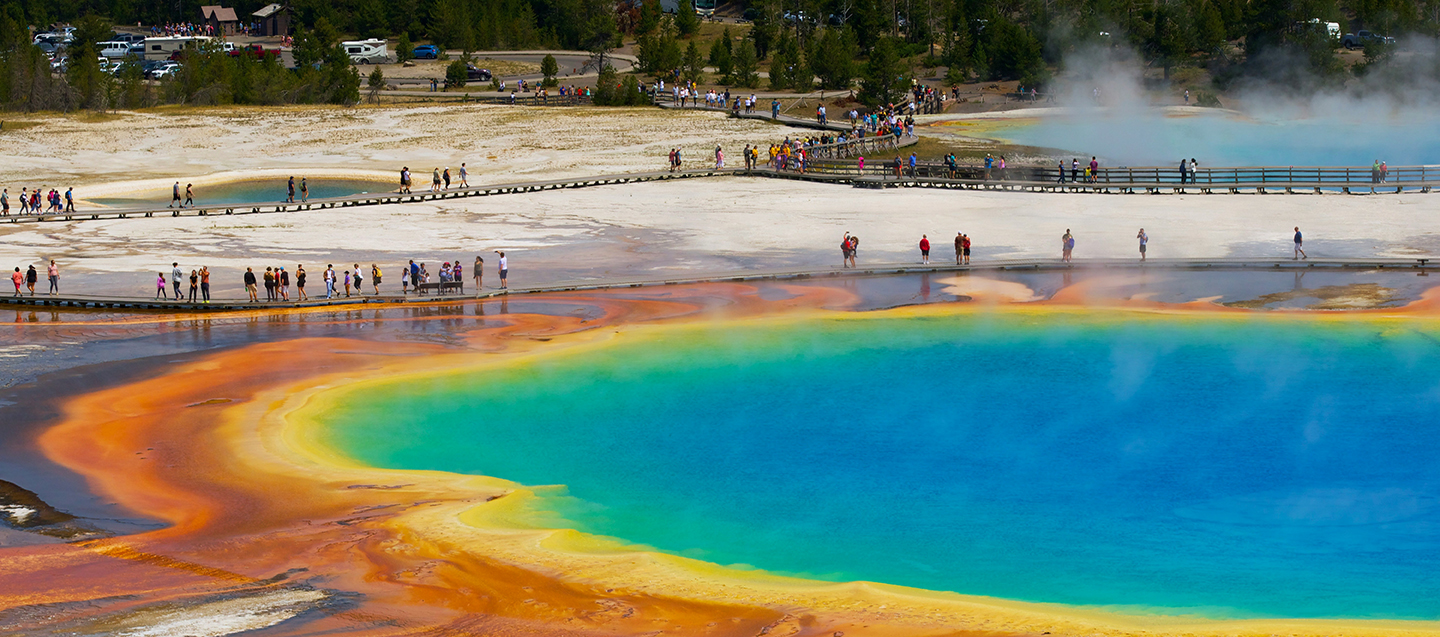
Stay on boardwalks and keep a safe distance from wildlife. Visitors have been severely injured or even killed after stepping off boardwalks in thermal areas where the thin fragile ground can suddenly give way causing them to break through or fall directly into scalding hot springs. Never leave the boardwalks near any thermal feature under any circumstances. This rule applies to children especially, supervise them closely at all times near geothermal areas.
Drive and Park Responsibly
Observe posted speed limits and use pullouts to watch wildlife, take pictures, and let other cars pass. Do not stop your vehicle in the road. When pulling over park with all four tires fully to the right of the white line. Wildlife jams, where a bison or bear sighting causes vehicles to stop in the middle of the road, are one of the most common causes of accidents in the park.
Leave No Trace
Don’t feed any animals, even birds and squirrels. Don’t take anything including wildflowers from their natural setting in the park. Feeding wildlife, even accidentally by leaving food unattended, habituates animals to humans and often leads to those animals being euthanized. A careless camp is a dangerous camp.
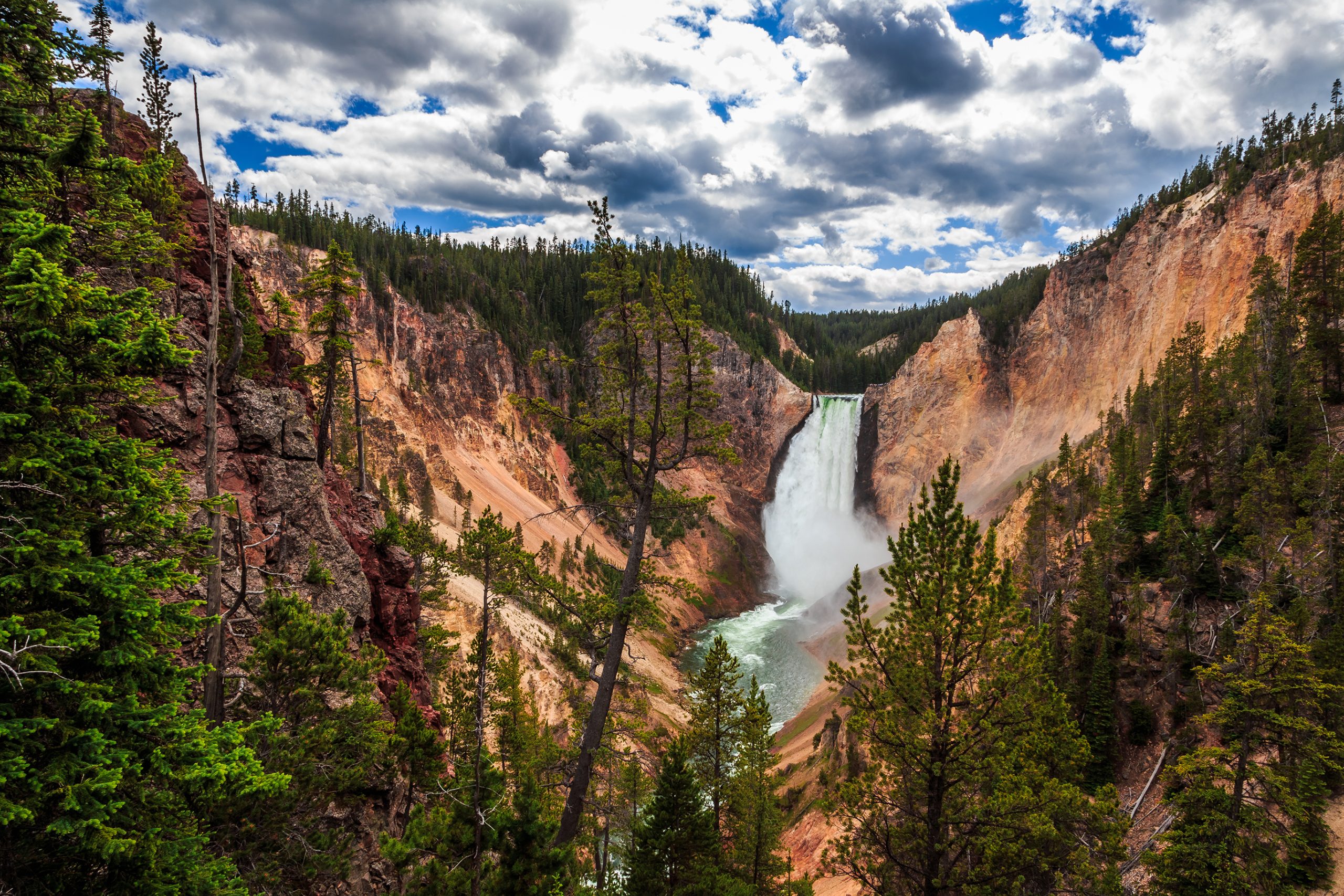
Lower Falls of the Yellowstone from Lookout Point, Yellowstone National Park Wyoming
Yellowstone National Park for Beginners: The Must-See Attractions
With so much to see and so little time, here is an honest guide to Yellowstone’s must-see attractions for Yellowstone National Park for beginners — what they are, why they matter, and how to experience them at their best.
Old Faithful Geyser
The icon of Yellowstone and the non-negotiable first stop for every first time visitor. Old Faithful erupts approximately every 90 minutes. Download the Yellowstone NPS app before your trip for current eruption prediction times so you can plan your day around a front row seat. The Old Faithful Visitor Education Center nearby provides outstanding context on the park’s geothermal system and is worth exploring before or after an eruption.
Grand Prismatic Spring
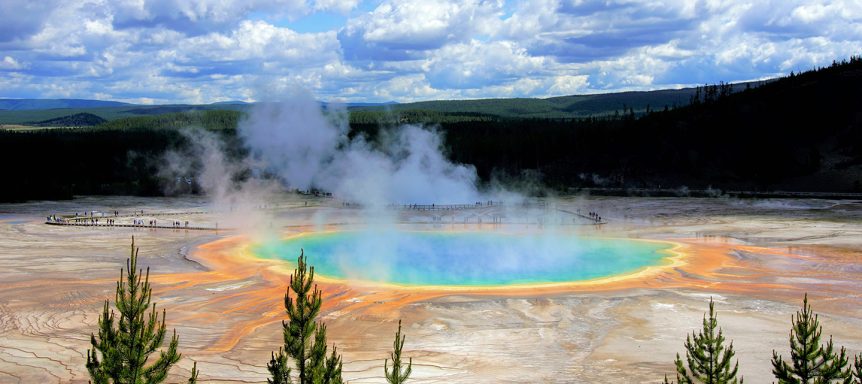
Grand Prismatic Spring adds another layer: its rings of orange, yellow, and green come from heat-adapted bacteria thriving at different temperatures — pure biology, no filter. The boardwalk at Midway Geyser Basin gives you a ground-level view of the spring but do not miss the Grand Prismatic Spring Overlook Trail — a mostly flat 1.5-mile hike from the Fairy Falls trailhead that gives you the aerial view that appears in every famous photograph of Yellowstone.g
Grand Canyon of the Yellowstone
The dramatic canyon snakes for some 20 miles and its fairly steep walls boast a range of colors in subtle shades of orange, pink, and auburn. Several waterfalls thunder through the canyon. The Lower Falls, dropping 308 feet into the canyon below, is one of the most spectacular natural features in the entire national park system. Artist Point on the South Rim delivers the iconic view that stops every first timer cold.
Hayden Valley
The premier wildlife watching destination in the park and the most directly accessible major attraction from the East Gate. Bison herds, grizzly bears, wolves, coyotes, eagles, and waterfowl are all regularly spotted in this spectacular open valley. For Yellowstone National Park for beginners this is the single most reliable place to have a genuine Yellowstone wildlife encounter.
Yellowstone Lake
Yellowstone Lake is North America’s largest high-elevation lake above 7,000 feet. It has 141 miles of shoreline and is more than 400 feet deep. The lake is directly accessible from the East Gate via Fishing Bridge and the Yellowstone Lake shoreline offers some of the most peaceful and beautiful scenery in the entire park.
Mammoth Hot Springs
The dramatic terraced travertine formations at Mammoth Hot Springs look like something from another planet and are unlike any other geothermal feature in the park. The resident elk herd that wanders freely around the visitor center is an added bonus that never fails to delight first time visitors.
Norris Geyser Basin
Norris includes Steamboat Geyser, the world’s tallest geyser at 300 to 400 feet. Norris is the hottest and most dynamic geyser basin in Yellowstone and a genuinely extraordinary stop for any first time visitor to the park.
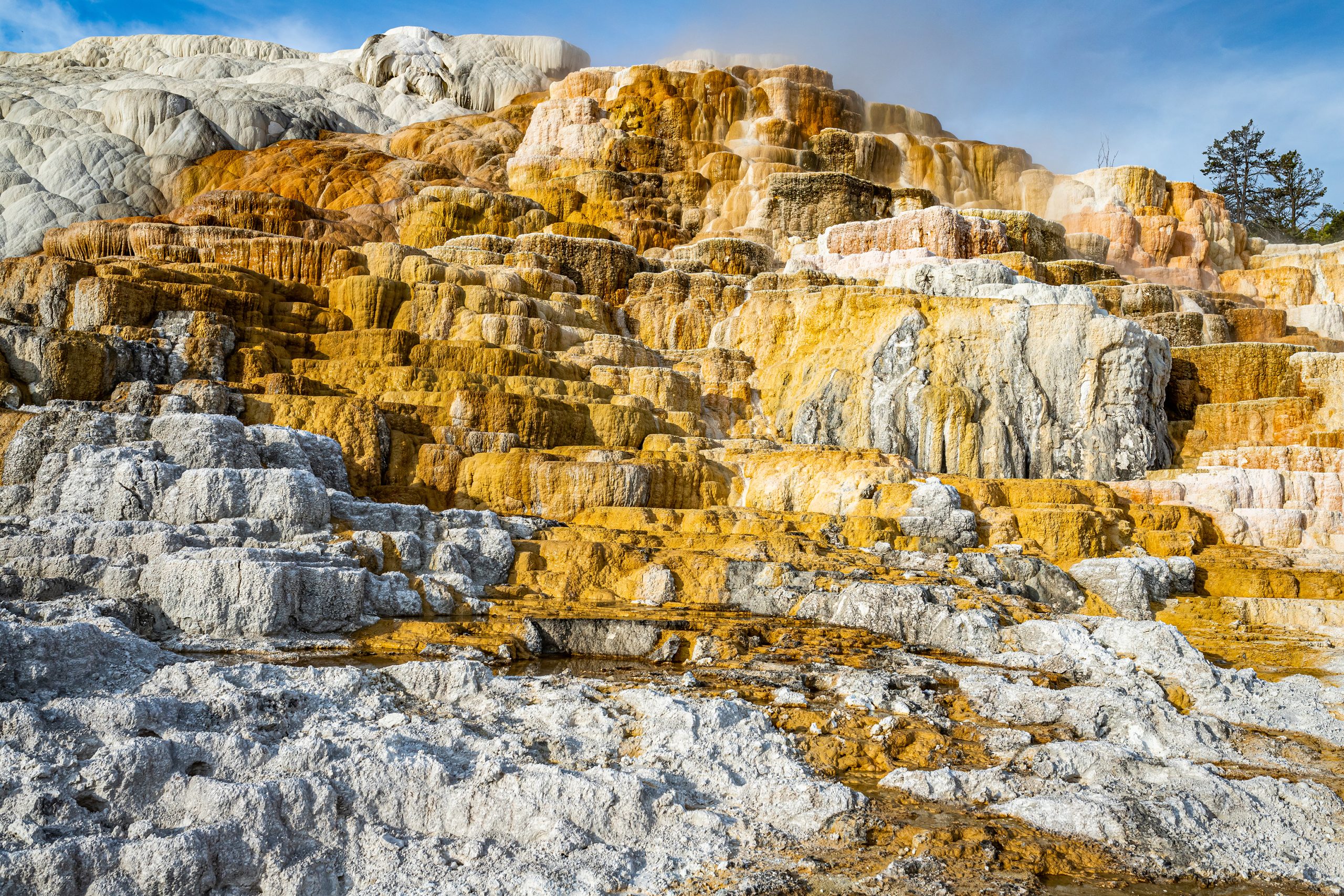
Mammoth Hot Spring at Yellowstone National Park in Wyoming.
Yellowstone First Time Tips: The Best Easy Hikes for Beginners
Yellowstone first time tips for hiking: do not overcomplicate it. The park has outstanding easy trails that deliver spectacular experiences without requiring advanced fitness or technical skills. Here are the best beginner-friendly hikes accessible from the East Gate:
Storm Point Trail — Yellowstone Lake 2.3 miles round trip, easy, minimal elevation gain. A beautiful loop along the Yellowstone Lake shoreline with outstanding wildlife watching. Perfect for families and complete beginners.
Mud Volcano Area Boardwalk 0.7 miles, easy, completely stroller and wheelchair accessible. A short loop through one of Yellowstone’s most dramatic geothermal areas — bubbling mud pots, steaming vents, and the theatrical Dragon’s Mouth Spring. One of the best Yellowstone first time tips for families with young children.
Natural Bridge Trail — Bridge Bay 2.0 miles round trip, easy, minimal elevation gain. A flat and accessible hike to a stunning natural rock arch carved by Bridge Creek. Great for all ages and fitness levels.
Elephant Back Mountain — Yellowstone Lake 3.6 miles round trip, moderate, 800 feet elevation gain. The most rewarding moderate hike near the East Gate — sweeping panoramic views of Yellowstone Lake and the Absaroka Mountains from the summit. A step up for first timers who want a more challenging experience.
Read our complete Hiking Near Yellowstone’s East Gate Guide for all 10 trails with difficulty ratings, distances, and NPS links for every hike.
What to Know Before Visiting Yellowstone: Your Packing Essentials
Knowing what to know before visiting Yellowstone in terms of packing is one of the most practical things you can do to set yourself up for success. Here is the short list of absolute essentials:
Bear Spray: One canister per adult, carried in a hip holster at all times outside your vehicle. Non-negotiable. Purchase in Cody before heading up the North Fork.
Layers: Base layer, warm mid layer, waterproof rain jacket. Yellowstone weather changes fast at any elevation and any time of year.
Sturdy Hiking Footwear: Trails range from flat boardwalks to rocky terrain. Leave the sandals in the car.
Binoculars: One of the most important pieces of gear for first time Yellowstone visitors. Wildlife distances are significant and good binoculars transform every encounter.
Downloaded Offline Maps: Cell service is unreliable throughout much of the park. Download the NPS app and save offline maps before you leave camp each morning.
America the Beautiful Pass: At $80 it covers entrance to all national parks for a full year. If you are visiting more than one park on your trip it pays for itself immediately.
Packed Lunches: Food options inside the park are limited and expensive. Pack substantial lunches and plenty of snacks each day from supplies stocked up in Cody before heading up the road.
Read our complete Yellowstone Packing List for the full gear breakdown — 25 must-have items for your first Yellowstone trip.
Yellowstone First Time Tips: How to Structure Your Days
The single most important of all Yellowstone first time tips is this: start every day before sunrise.
Don’t forget to wake up early. Dawn is the best time for wildlife spotting. The park’s most dramatic wildlife activity happens in the first two hours after sunrise. Parking lots at major attractions begin filling by 8am in peak season and are often completely full by 9am. First timers who sleep in regularly miss the best of what Yellowstone has to offer.
Here is a daily structure that works beautifully for first time Yellowstone visitors staying at Old Faithful RV Park:
5:00am: Wake up and coffee at camp on the banks of the North Fork of the Shoshone River.
5:30am: On the road up the Buffalo Bill Scenic Byway toward the East Gate — wildlife watching begins immediately on the drive.
6:15am: Through the East Gate and into the park.
6:30-9:30am: Prime wildlife watching window at Hayden Valley or your chosen wildlife destination. This is the golden period — be in position and be patient.
9:30am-12:00pm: Move to a thermal feature or hiking trail before the midday crowds peak.
12:00-2:00pm: Picnic lunch at a scenic location — Yellowstone Lake shoreline, a canyon overlook, a meadow pullout.
2:00-5:00pm: Visit a second attraction or continue exploring — less pressured in the afternoon as some day visitors begin heading out.
5:00-7:00pm: Return to Hayden Valley or another wildlife area for the late afternoon activity window.
7:30pm: Back through the East Gate and down the scenic byway to camp.
After dark: Step outside and look up. Your Bortle Class 1 dark sky experience begins.
Pencil in just one or two major sites or timed events a day and then leave the rest open. This is excellent advice for first time Yellowstone visitors. The park rewards those who slow down, stay in one place, and let the experience come to them rather than rushing from attraction to attraction.
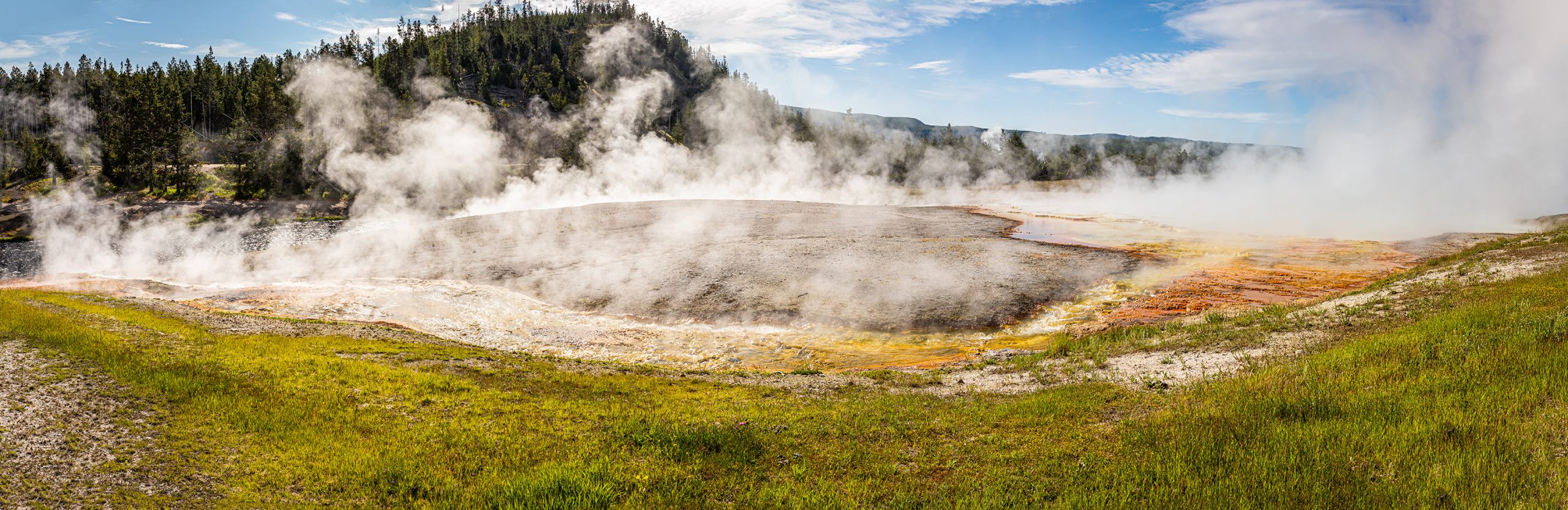
Excelsior Geyser Crater at Yellowstone National Park in Wyoming.
Yellowstone National Park for Beginners: Wildlife Watching 101
Wildlife watching is the defining experience of Yellowstone National Park for beginners and the greater Yellowstone ecosystem, and it rewards preparation, patience, and early rising above all else.
Here are the essential Yellowstone National Park for beginners wildlife watching tips:
Know Where to Go: Hayden Valley and Lamar Valley are the two premier wildlife watching destinations in the park. From the East Gate, Hayden Valley is your primary morning destination. It is closer, more accessible, and delivers consistently outstanding wildlife encounters for first time visitors.
Know When to Go: Dawn and dusk are the golden hours. Be in position before sunrise and stay through the first two hours of morning light for the best possible wildlife activity.
Bring the Right Gear: Binoculars are essential. A camera with a long zoom lens dramatically improves your wildlife photography. A spotting scope is a game-changer for serious wildlife watchers who want to identify animals at distance.
Talk to the Rangers: Rangers at the Fishing Bridge Visitor Center have real-time information on recent wildlife sightings throughout the eastern park. Five minutes with a ranger every morning can completely transform your day.
Be Patient: You never know when you might happen upon a herd of bison crossing the river or a rare eruption. The surprises that make Yellowstone so special happen to those who slow down, stay in one place, and give the wildlife time to reveal itself. Cody Stampede Rodeo
Read our complete Yellowstone Wildlife Watching Guide for the full season by season and location by location breakdown of everything you can see and where to find it.
First Time Visiting Yellowstone With Kids
If this is your first time visiting Yellowstone with children, you are in for a genuinely magical experience. Yellowstone is one of the greatest family travel destinations in the world and the Junior Ranger Program is your secret weapon.
Pick up a Junior Ranger booklet at the Fishing Bridge Visitor Center the moment you enter the park. Kids who work toward their badge are dramatically more engaged throughout the visit — looking more carefully at wildlife, reading interpretive signs, and asking better questions about everything they see.
Read our complete Yellowstone with Kids Guide for everything families need to know before their first Yellowstone visit — safety tips, best family hikes, the best Yellowstone entrance for families, and how to make every day an adventure.
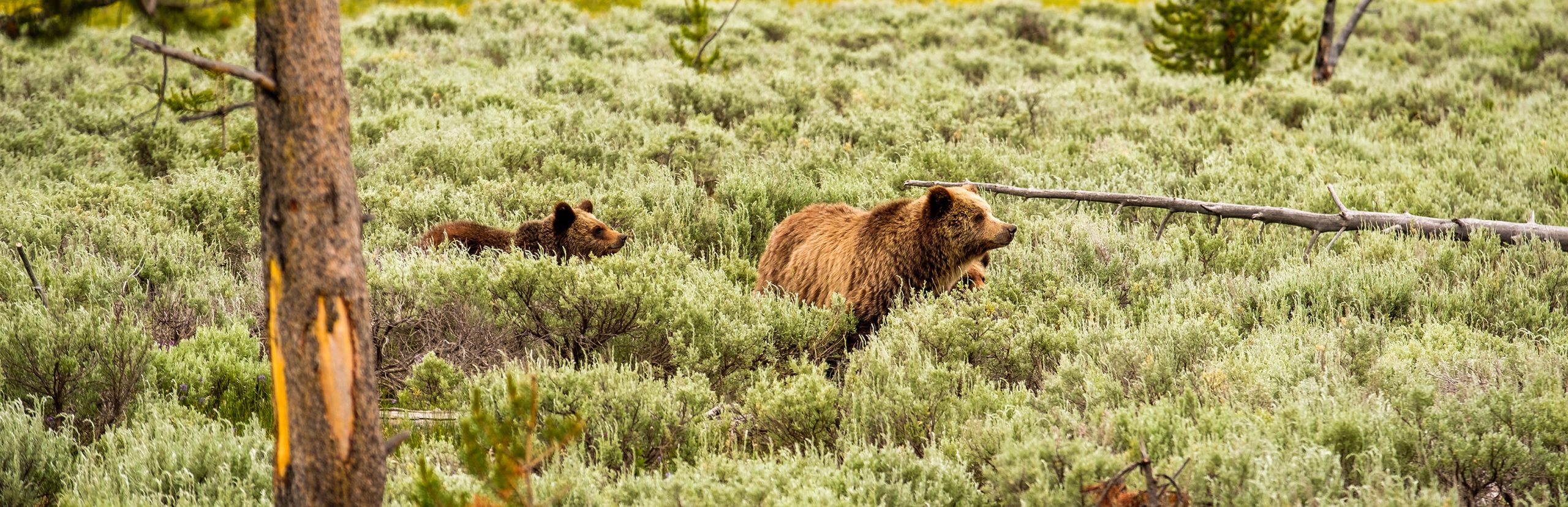
Grizzly bear in Yellowstone National Park, Wyoming, USA
First Time Visiting Yellowstone: Your Perfect Basecamp
Every great first time Yellowstone visit needs a great home base. At Old Faithful RV Park on the North Fork of the Shoshone River in Cody, Wyoming, just 32 miles from the East Gate of Yellowstone National Park, you have everything you need to make your first visit to this extraordinary place as comfortable, convenient, and memorable as possible.
Our full hookup RV sites are big rig friendly with spacious pull through sites and stunning Absaroka Mountain views. Our rustic cabins sleep up to 6 guests with a main floor bedroom, a loft bedroom the kids absolutely love, a sofa sleeper, full bathroom, and fully equipped kitchenette.
The North Fork of the Shoshone River runs alongside the park, one of the top 10 fly fishing rivers in the northern Rockies, with direct river access via our adjacent BLM land. The Buffalo Bill Scenic Byway begins at our front door and delivers wildlife watching from the moment you leave camp. And every clear night the extraordinary Bortle Class 1 dark sky blazes above you in one of the darkest locations in the lower 48 states.
Before your first visit make sure you have explored our complete collection of Yellowstone planning guides:
- Best Yellowstone Entrance Guide : why the East Gate is the smart choice
- Yellowstone Wildlife Watching Guide : the best spots, seasons, and species
- Hiking Near Yellowstone’s East Gate : 10 amazing trails for every skill level
- Bear Safety in Yellowstone Country : essential reading before every trip
- Yellowstone Packing List : pack smart and travel confident
- Yellowstone with Kids Guide : the complete family travel guide
- Fly Fishing the North Fork Shoshone River : your complete angler’s guide
- Dark Sky Stargazing at Old Faithful RV Park : everything about our extraordinary night sky
- Yellowstone Memorial Day Weekend Guide : if your first visit falls over Memorial Day
Open now for the 2026 season Book your RV site or cabin at OldFaithfulRVPark.com
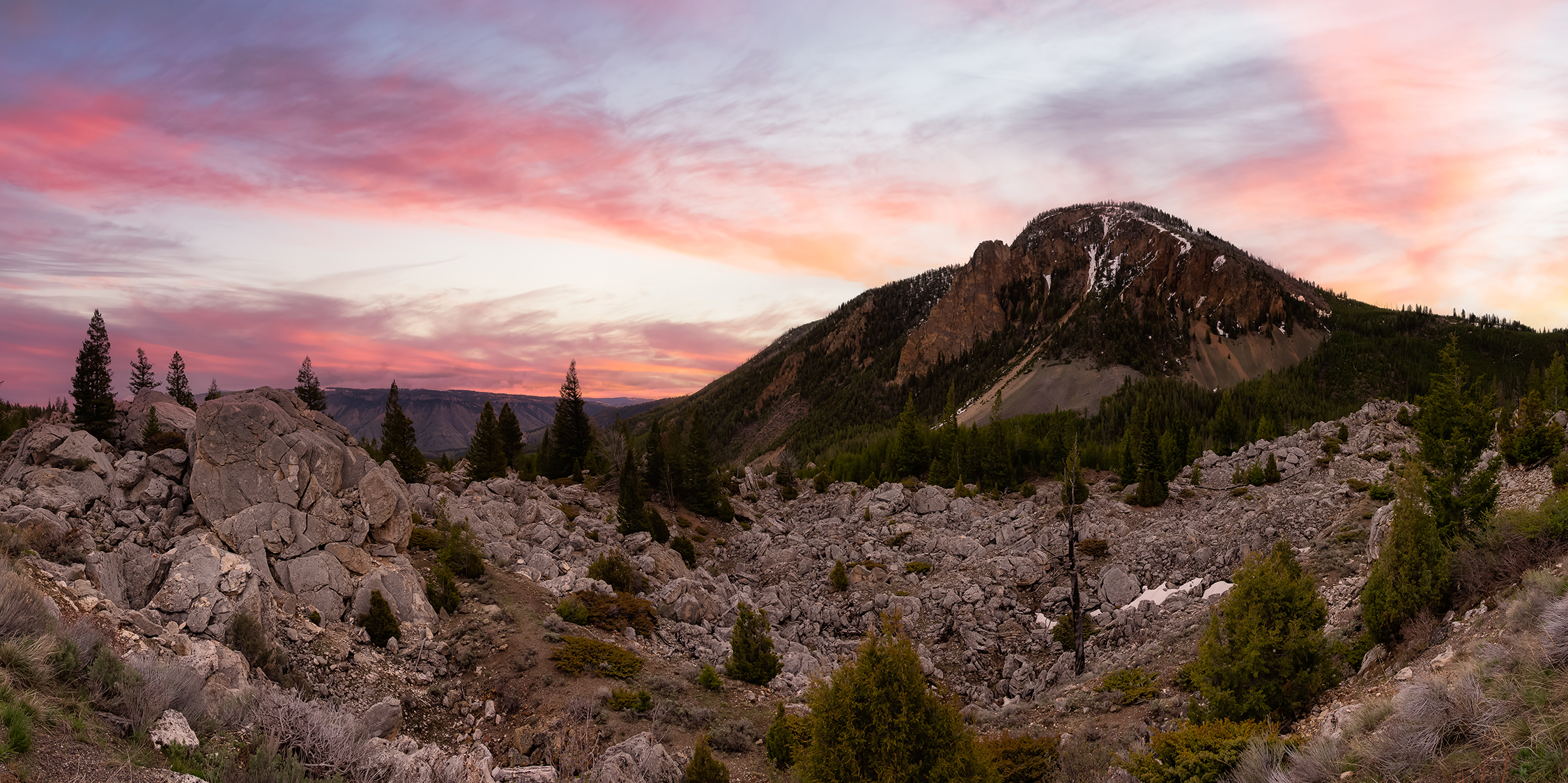
Mountain in the American Landscape. Yellowstone National Park, Wyoming. United States. Sunset Sky Art Render. Nature Background. Panorama
Frequently Asked Questions: First Time Visiting Yellowstone
How many days do I need for my first time visiting Yellowstone?
Two days gets you the highlights, one day for the thermal loop including Old Faithful, Grand Prismatic, and Norris, and one day for Lamar Valley wildlife. Four days lets you add Mount Washburn, the Grand Canyon of the Yellowstone at Artist Point, Hayden Valley, and time to actually sit and wait for wildlife rather than drive past it. We recommend a minimum of four to five days for a first time Yellowstone visit to experience the park properly without feeling rushed.
What is the best time of year for a first time visit to Yellowstone?
May through early June and September are the sweet spots for first time visitors, lighter crowds than peak summer, outstanding wildlife activity, and spectacular scenery. Summer from late June through August offers full park access but significantly heavier crowds. Read our complete Yellowstone Wildlife Watching Guide for the full season by season breakdown.
Do I need a reservation to enter Yellowstone in 2026?
Yellowstone does not use a vehicle reservation or timed entry system in 2026. You drive in with a valid pass at any time. However accommodation books up months in advance for peak summer dates. Book your stay at Old Faithful RV Park as early as possible.
What is the best entrance for a first time Yellowstone visit?
For a single basecamp first time visit the East Gate near Cody, Wyoming is the smartest choice, minimal wait times, a spectacular scenic drive, direct access to Hayden Valley wildlife watching, and Old Faithful RV Park as the perfect basecamp just 32 miles from the gate. For visitors with five or more days a multi-basecamp strategy combining the East Gate, South Gate, and West Gate delivers the most complete first time Yellowstone experience. Read our complete Best Yellowstone Entrance Guide for the full comparison.
What should I pack for my first time visiting Yellowstone?
Bear spray is the single most important item, every adult needs their own canister carried in a hip holster at all times. Beyond that: layers for unpredictable weather, sturdy hiking footwear, binoculars, downloaded offline maps, the America the Beautiful Pass, and packed lunches for each day in the park. Read our complete Yellowstone Packing List for the full 25-item gear breakdown.
Is Yellowstone good for first time visitors with kids?
Absolutely. Yellowstone is one of the greatest family travel destinations in the world and the Junior Ranger Program is a must for every child visiting the park. Read our complete Yellowstone with Kids Guide for everything families need to know before their first visit.
Where is the best place to stay for someone first time visiting Yellowstone near the East Gate?
Old Faithful RV Park in Cody, Wyoming offers full hookup RV sites and rustic cabins sleeping up to 6 guests just 32 miles from the East Gate of Yellowstone National Park, the perfect first timer basecamp for exploring the eastern park with minimal crowds and maximum convenience.
What are the most important rules to know before visiting Yellowstone for the first time?
The four most critical rules for first time Yellowstone visitors are: maintain safe distances from all wildlife at all times, stay on boardwalks near all thermal features, carry bear spray every time you leave your vehicle, and start every day before sunrise to avoid crowds and maximize wildlife watching opportunities.
Rest. Explore. Repeat.