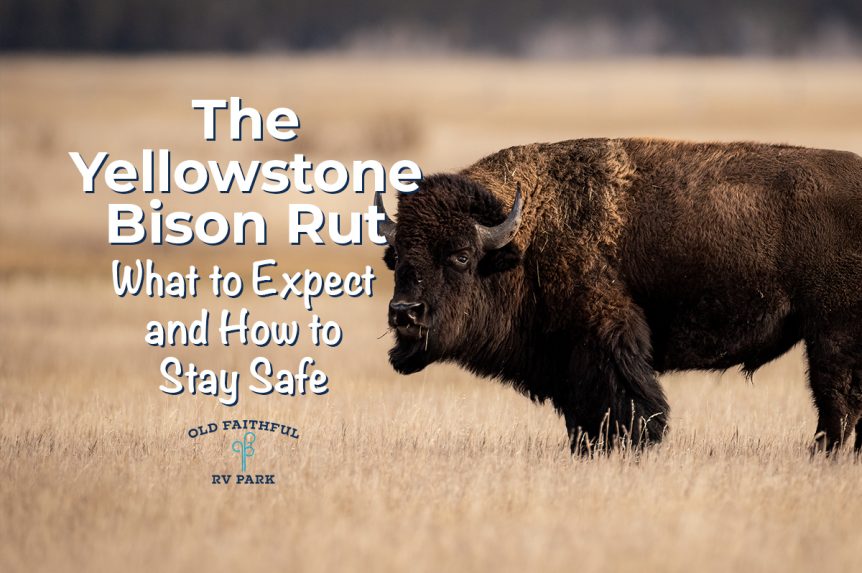
If you are visiting Yellowstone in late July or August you are here at one of the most dramatic times of the entire year. The Yellowstone bison rut is in full swing right now and it changes everything about how these animals behave.
During bison rut season Yellowstone transforms into one of the most dramatic wildlife destinations on earth. Bison that spent the spring and early summer grazing calmly across Hayden Valley are now driven by something much more powerful than hunger. Bulls are competing for cows. They are agitated, unpredictable, and looking for a fight. And right now in 2026 that reality has already made national headlines twice.
This blog is not meant to scare you away from Yellowstone. It is meant to help you understand what is happening with the bison right now, what the rut actually looks like, and how to experience it safely. Because the Yellowstone bison rut is genuinely one of the most extraordinary wildlife spectacles in North America and it is happening right outside your door.
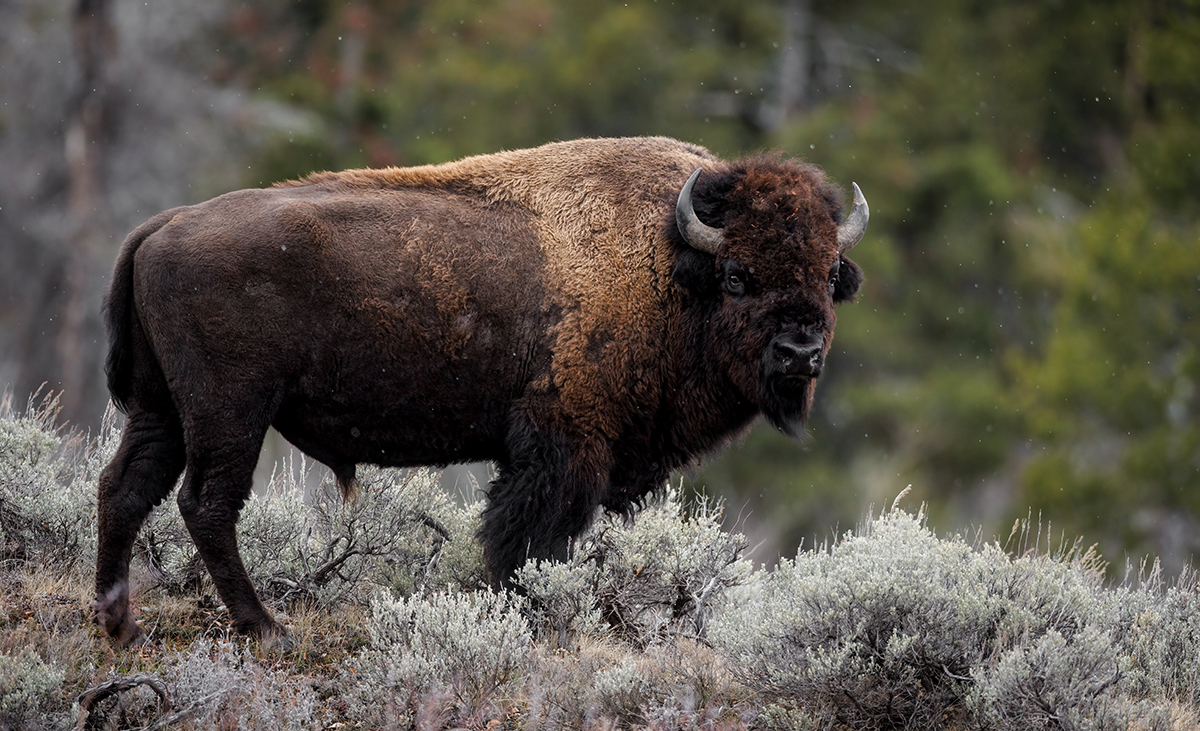
A mature bull bison moves through sagebrush, the kind of powerful animal that becomes significantly more unpredictable during the Yellowstone bison rut season in late July and August.
What Is the Yellowstone Bison Rut?
The Yellowstone bison rut is the annual breeding season for Yellowstone’s bison herd, one of the largest and most genetically pure bison herds in the world with roughly 5,000 animals. It typically runs from late July through August and peaks in early to mid August.
The bison rut Yellowstone visitors witness each August is unlike anything else in North America. During the rut bull bison completely change their behavior. For most of the year bulls live separately from cows and calves, grazing quietly on their own or in small bachelor groups. During the rut everything changes. Bulls rejoin the main herd, compete aggressively with other bulls for breeding rights, and become extremely territorial and unpredictable.
Here is what the rut actually looks like if you are lucky enough to witness it:
Bellowing. Bull bison produce a deep resonant bellow during the rut that carries across entire valleys. If you hear a sound like a low rumbling roar coming from Hayden Valley at dawn you are hearing the rut.
Wallowing. Bulls roll in dirt and mud during the rut, coating themselves in dust to both cool down and mark their scent. A freshly wallowed bull with a cloud of dust around him is a striking and unforgettable sight.
Chasing. Bulls chase cows relentlessly and charge other bulls that come too close. This is when bison move fast, unpredictably, and in directions that can surprise everyone nearby including other bison.
Fighting. Bull bison clash head to head during the rut in contests of strength that shake the ground. When two large bulls decide to settle a dispute they do not look where they are going.
Yellowstone Bison Attack 2026: What Actually Happened
There have been two bison related injuries in Yellowstone so far in 2026 and they are worth talking about honestly because they illustrate something important about the rut and about Yellowstone bison safety.
The first incident happened on June 26 near Mud Volcano, north of Fishing Bridge. A 12 year old visitor was injured. The investigation is still ongoing.
The second Yellowstone bison attack happened on July 10 at Bridge Bay Campground and was captured on video by professional photographer Mike MacLeod. A 65 year old grandfather was thrown 8 feet into the air by a bull bison while walking with his grandson. The man sustained serious injuries and we are wishing him a full and speedy recovery.
Here is the part that matters most about the July 10 Yellowstone bison attack. Nobody was doing anything wrong.
MacLeod, who filmed the entire thing, was clear about what he saw. People were keeping their distance. Someone was even calling out to warn others that the bison was coming through. The man and his grandson were well beyond the required distance when the bull targeted them.
“I didn’t see anybody getting close,” MacLeod said. “People were yelling, ‘Careful, there’s a bison coming through,’ and they kept their distance. They were very respectful.”
The bison was already agitated before any of this happened. MacLeod described the bull as angry and charging anything and everything when it entered the campground. It had already charged a group of children who were at a safe distance before turning its attention to the grandfather and his grandson.
This is why Yellowstone bison safety during rut season requires a higher level of awareness than at any other time of year.
Sometimes you can do everything right and still be at risk.
That is the honest truth about the Yellowstone bison rut. When a 2,000 pound animal decides to charge and you are anywhere near its path the outcome can be serious regardless of whether you followed every rule. That does not mean you should not visit Yellowstone. It means you should understand what you are dealing with and take every reasonable precaution.
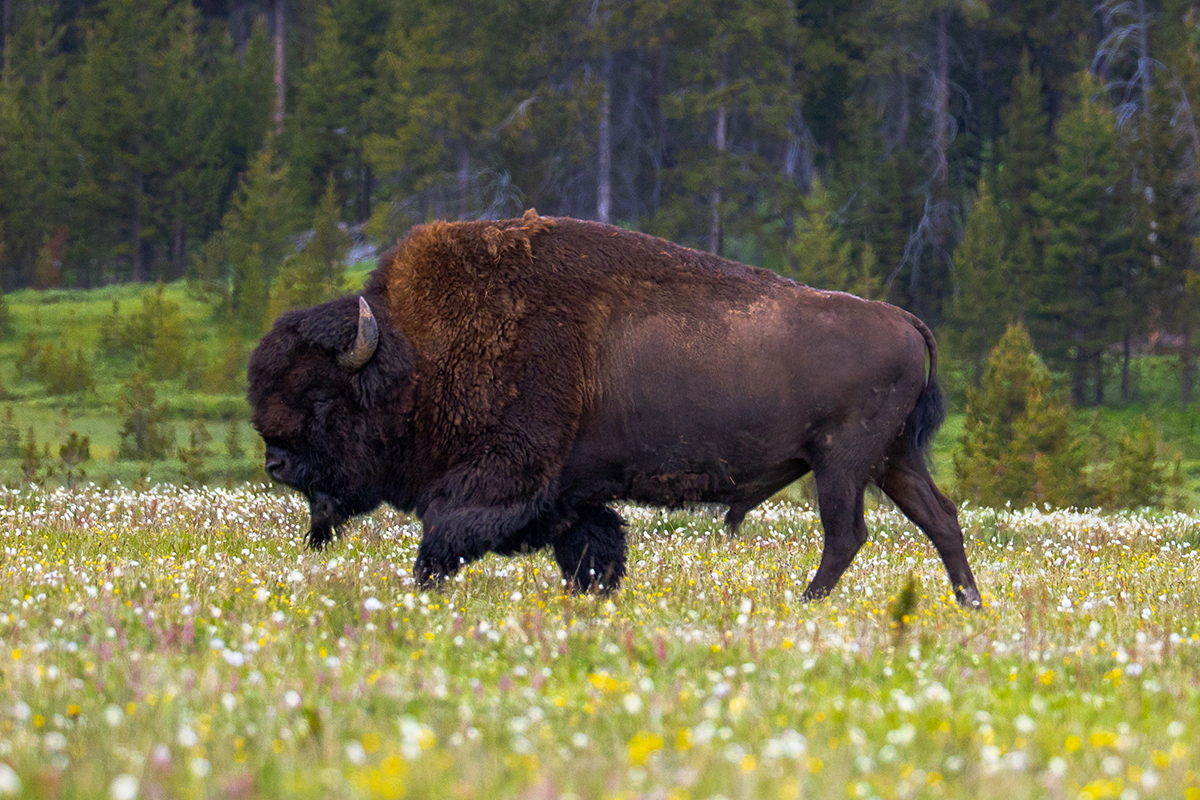
A bull bison moves through a wildflower meadow, one of the most peaceful looking sights in Yellowstone that can change in an instant during bison rut season.
Why the Bison Rut Yellowstone Season Makes Bison More Dangerous
Understanding why the Yellowstone bison rut makes bison more dangerous is actually really helpful for staying safe. It is not that bison become mean. It is that their entire focus and energy shifts in ways that make their behavior much harder to predict.
Bulls are sleep deprived and physically exhausted. During peak rut a dominant bull may barely eat or sleep for days while guarding cows and fighting off rivals. An exhausted food deprived animal operating on pure instinct is far less predictable than a calm grazing bison on a spring morning.
Bulls are hypervigilant. During the bison rut Yellowstone bulls are on alert for rival bulls, threats to cows, and anything that looks like a challenge. Something as simple as a person moving in an unexpected direction or making a sudden sound can trigger a charge.
Bison move unpredictably during chases. When a bull is chasing a cow or charging a rival he is not watching where he is going. Bison jams during the rut are not just traffic delays, they are situations where very large animals are running in unpredictable directions through areas where people are standing.
The rut brings bison into campgrounds and developed areas. As the July 10 Yellowstone bison attack showed bison during the rut do not limit themselves to open meadows. They wander through campgrounds, parking lots, and visitor areas. A bull that enters a developed area during peak rut is already agitated and has reduced tolerance for anything in his path.
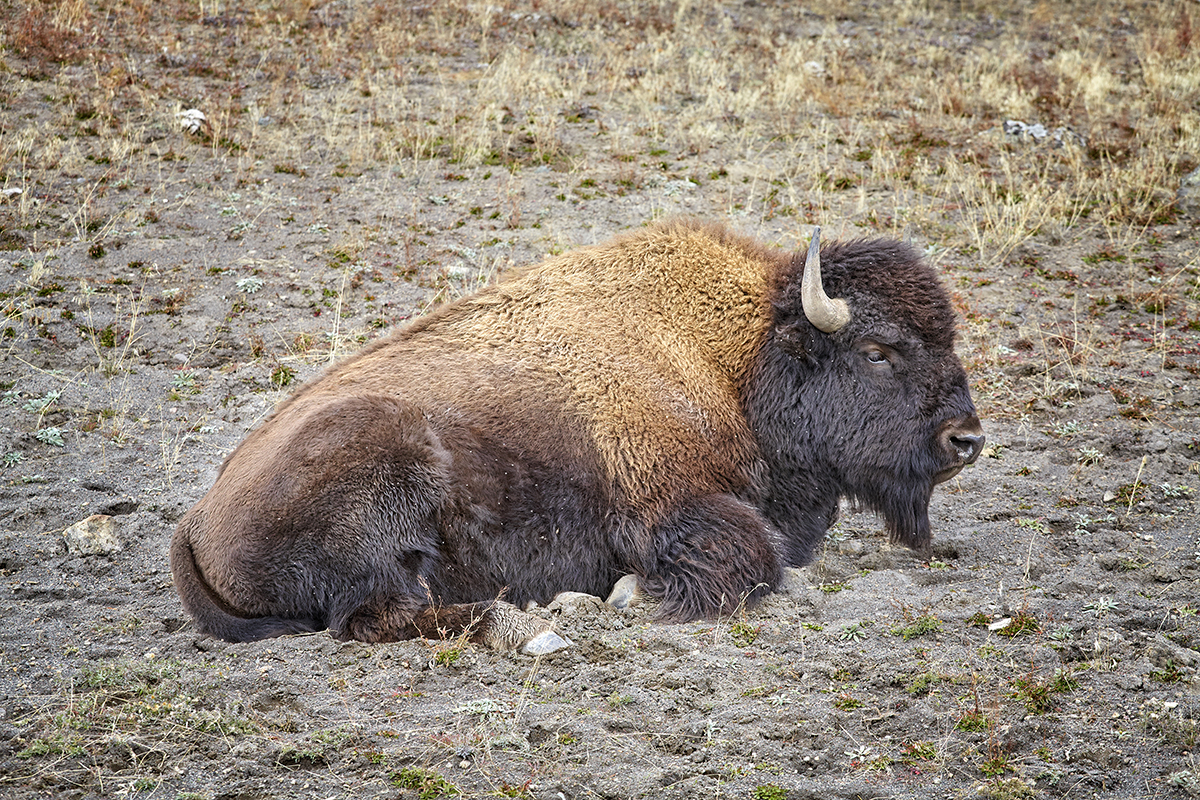
A bison resting on dry ground looks completely calm and approachable. During the Yellowstone bison rut that calmness can change in an instant with almost no warning.
Yellowstone Bison Safety During the Rut
The Yellowstone bison safety rules during the rut are the same as they are year round but the stakes are higher and the need to take them seriously is greater.
Stay at least 25 yards from bison at all times. That is the legal minimum. During the Yellowstone bison rut consider giving them even more space than the minimum if you can. A bull bison can cover 25 yards in about two seconds.
Never assume a calm looking bison is a safe bison. Bison can go from standing still to a full charge in an instant and with almost no warning. The bull at Bridge Bay Campground on July 10 was already charged up before any of the nearby visitors knew what was happening.
If a bison approaches you, move away. Do not wait to see what happens. Move away calmly and steadily. Do not run. Do not turn your back and sprint. Move sideways and put distance between yourself and the animal.
Stay in your vehicle when bison are nearby in campgrounds. The July 10 Yellowstone bison attack happened in a campground. If bison wander through your campsite during the rut the safest place to be is inside your vehicle. Your RV or truck is not a threat to a bison. A person standing outside is a potential one.
Do not get between a bull and a cow during the rut. This is one of the most dangerous positions you can be in during the Yellowstone bison rut. A bull that is following or guarding a cow will charge anything it perceives as standing between them.
Carry bear spray and know how to use it. Bear spray has been shown to be effective in deterring bison charges as well as bear encounters. It is worth having on your belt every time you step out of your vehicle in the park during bison rut season Yellowstone visitors should treat it as essential gear.
Read our complete Yellowstone Wildlife Safety Guide for the full rundown of safety rules for every animal in the park.
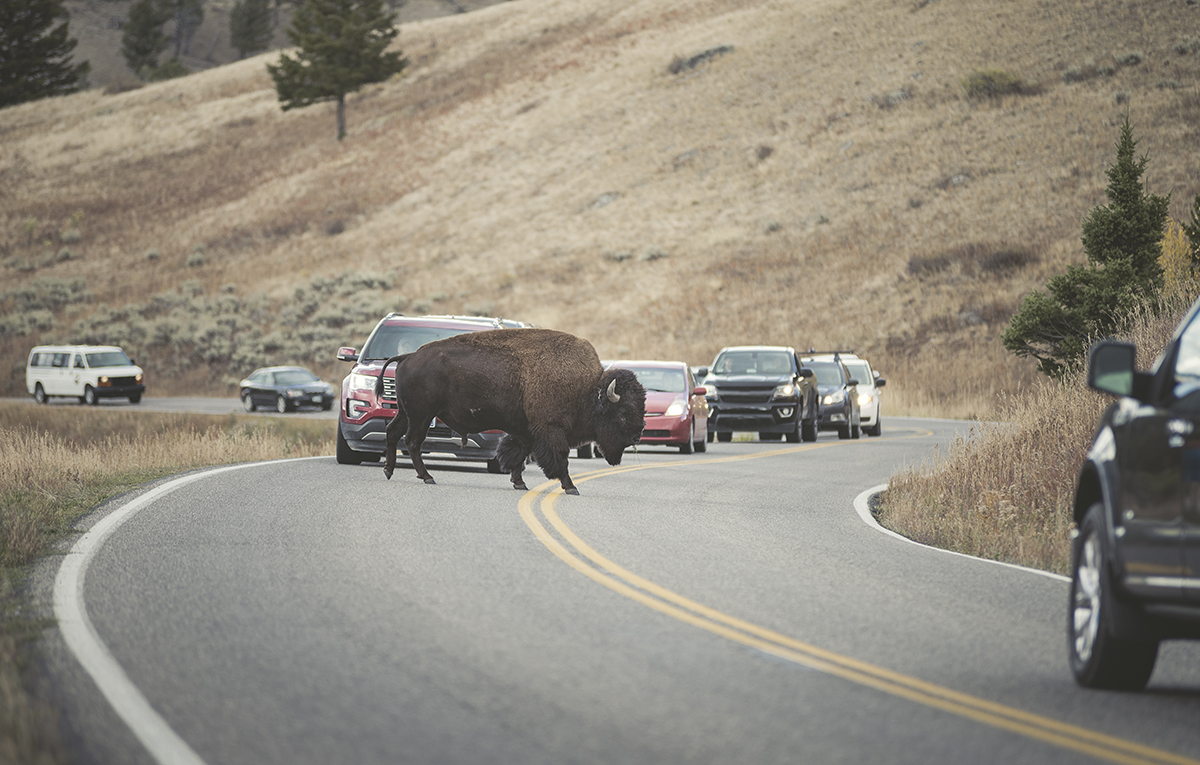
A classic Yellowstone bison jam during peak season. During the bison rut these roadside encounters carry more risk than at any other time of year. Stay in your vehicle and wait for the bison to move on.
Where to Watch the Bison Rut Yellowstone Safely
Knowing where to go for the bison rut Yellowstone offers some of the most accessible and dramatic wildlife viewing in the country. The key is watching from the right places with the right amount of space.
Hayden Valley is the single best place to watch the Yellowstone bison rut from the East Gate. Pull into one of the large roadside pullouts, stay in or right next to your vehicle, and watch the valley with binoculars. The bellowing, wallowing, and chasing happen right out in the open meadows and from a pullout you have a safe buffer while still having a front row seat.
Lamar Valley is equally outstanding for rut viewing and is described by wildlife watchers as the best place in the world to see large wild bison herds during peak rut. Again pullouts are your friend. Stay near your vehicle and use binoculars or a spotting scope for the best views.
Along the East Entrance Road between the East Gate and Fishing Bridge the rut activity can be extraordinary. The drive itself becomes a wildlife watching experience and you can observe bison behavior safely from your vehicle along the entire corridor.
Avoid being on foot when bison are actively rutting nearby. Boardwalks and trails in areas where bison are present during peak bison rut season Yellowstone carry more risk than open meadow pullouts. Stick to your vehicle and roadside pullouts when bison are actively chasing, bellowing, or displaying.
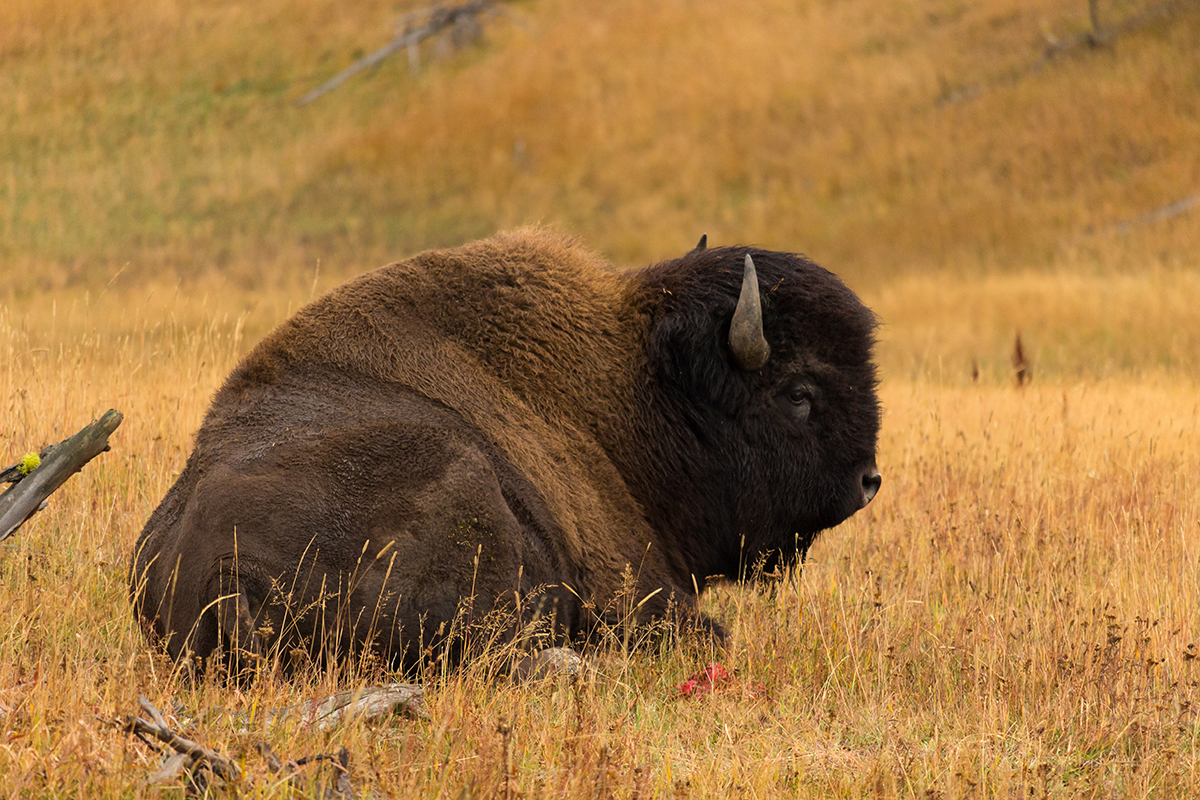
A bull bison rests in golden grass during peak rut season, the time of year when even resting animals can be on a hair trigger and Yellowstone bison safety awareness matters most.
The Honest Reality of Visiting Yellowstone During the Bison Rut
We want to be straightforward with you about something. The Yellowstone bison rut is genuinely one of the most spectacular wildlife events in North America. It is also genuinely unpredictable in ways that no set of safety rules can completely eliminate.
You can do everything right. Stay the right distance. Move away when they approach. Stay near your vehicle. And still find yourself near a bison that has decided it is done tolerating everything in its path that day. The grandfather at Bridge Bay Campground on July 10 is proof of that. He did everything right.
That does not mean you should not go to Yellowstone in August. It means you should go with your eyes open, your awareness up, and a genuine respect for what these animals are capable of. Yellowstone bison safety is not just about following rules. It is about staying alert and trusting your instincts every single moment you are in the park.
Stay alert. Give bison more space than you think they need. And if something feels wrong, move. Your instincts are worth listening to.
Your East Gate Basecamp for Bison Rut Season in Yellowstone
If you want to be in position to watch the Yellowstone bison rut at its absolute peak Old Faithful RV Park in Cody, Wyoming puts you just 32 miles from the East Gate of Yellowstone National Park. The drive up the Buffalo Bill Scenic Byway to the East Gate puts you directly into Hayden Valley wildlife watching country within an hour of leaving camp.
The East Gate is the smart choice for bison rut season Yellowstone because it gives you direct access to Hayden Valley, one of the two best bison rut viewing areas in the entire park, without fighting through West Entrance traffic. You can be at a Hayden Valley pullout watching bulls spar at sunrise and back at camp for breakfast before the crowds start building.
Full hookup RV sites for all sizes of rigs. Rustic cabins sleeping up to 6 guests with fresh linens included. And every clear night the Bortle Class 1 dark sky above the North Fork of the Shoshone River is an extraordinary bonus.
Before your trip read these helpful guides:
- Yellowstone Wildlife Safety Guide : the complete safety guide for every animal in the park
- Yellowstone in August : what to expect during peak summer season
- Yellowstone Itinerary Guide : day by day plans from one day to seven days
- Best Yellowstone Entrance Guide : why the East Gate near Cody is the smart choice
- Yellowstone Wildlife Watching Guide : where and when to see the most wildlife
👉 Book your RV site or cabin at OldFaithfulRVPark.com
Frequently Asked Questions: Yellowstone Bison Rut
When is the Yellowstone bison rut?
The Yellowstone bison rut typically runs from late July through August with peak activity in early to mid August. Right now in late July the rut is beginning and will build to its peak over the next two to three weeks.
Is it safe to visit Yellowstone during the bison rut?
Yes, with the right precautions. Yellowstone bison safety during rut season requires staying at least 25 yards from bison at all times, staying near your vehicle in areas where bison are active, and moving away calmly if a bison approaches. Be aware that during the bison rut Yellowstone behavior is more unpredictable than at other times of year. As the July 2026 Yellowstone bison attack at Bridge Bay Campground showed even visitors following all the rules can find themselves at risk when an agitated bull decides to charge.
Where is the best place to watch the Yellowstone bison rut?
Hayden Valley and Lamar Valley are the two best locations for watching the Yellowstone bison rut. Stay in or near your vehicle at designated roadside pullouts and use binoculars or a spotting scope for the best views at a safe distance.
What happened in the 2026 Yellowstone bison attack?
There have been two Yellowstone bison attack incidents in 2026. The most notable was on July 10 at Bridge Bay Campground where a 65 year old grandfather was thrown 8 feet into the air by an agitated bull bison while walking with his grandson. Professional photographer Mike MacLeod who filmed the incident confirmed that nobody was doing anything wrong. The bison entered the campground already agitated and charged everyone in its path. The man sustained serious injuries. Understanding Yellowstone bison safety is essential before any visit especially during bison rut season Yellowstone.
What does a bison look like when it is about to charge?
Warning signs include tail raised, pawing the ground, snorting, and swinging the head. However as the 2026 Yellowstone bison attack incidents have shown bison can charge with very little warning especially during the rut when bulls are already agitated. Never assume a calm looking bison will stay calm.
How fast can a bison run?
Bison can run up to 35 miles per hour. That is faster than most people realize and it is why the 25 yard minimum distance matters so much during the Yellowstone bison rut. A bison covers 25 yards in about two seconds.
What should I do if a bison charges me?
Move sideways and put distance between yourself and the animal. Do not run directly away. If you have bear spray and the bison is within 25 to 40 feet deploy it in a downward sweeping motion to create a cloud the animal has to run through. Get behind a solid barrier like a vehicle, a large tree, or a building if one is nearby. Yellowstone bison safety experts consistently recommend bear spray as an essential tool during bison rut season Yellowstone.
Why do bison wander into campgrounds during the rut?
During the bison rut Yellowstone bulls are driven by instinct rather than habit. They follow cows wherever they go and chase rivals into whatever terrain the chase leads them through. Campgrounds, parking lots, and developed areas are not off limits to bison during the rut. If a bison enters your campsite during the Yellowstone bison rut get inside your vehicle and wait for it to move on.
Rest. Explore. Repeat.